What Is a Yacht? Definitions, Sizes & Types Explained
What is considered a yacht? When does a boat become a yacht? How big is a yacht? Explore the answers to these common questions and more in our comprehensive yacht definition guide.

The question, “What is a yacht?” might seem straightforward at first glance. After all, other methods of water transportation — from cruise ships to speedboats — have cut-and-dried explanations, so why wouldn’t the definition of a yacht follow suit? The answer is quite simple, really: because what defines a yacht varies considerably in terms of size, function, and more, there is no one true industry definition.
However, that doesn’t mean what is classified as a yacht can’t be clarified. We at Yacht.com compiled a list of the most frequently asked questions about yachts and provided clear, digestible definitions and explanations backed by intensive industry research.
So, if you’ve ever wondered, “What makes a boat a yacht?”, pondered the difference between motor yachts vs. sailing yachts, struggled to quantify yacht size, and so on, you’ve come to the right place. Let’s dive in!
So, What Is a Yacht, Exactly?
© Andrea Muscatello | Dreamstime.com
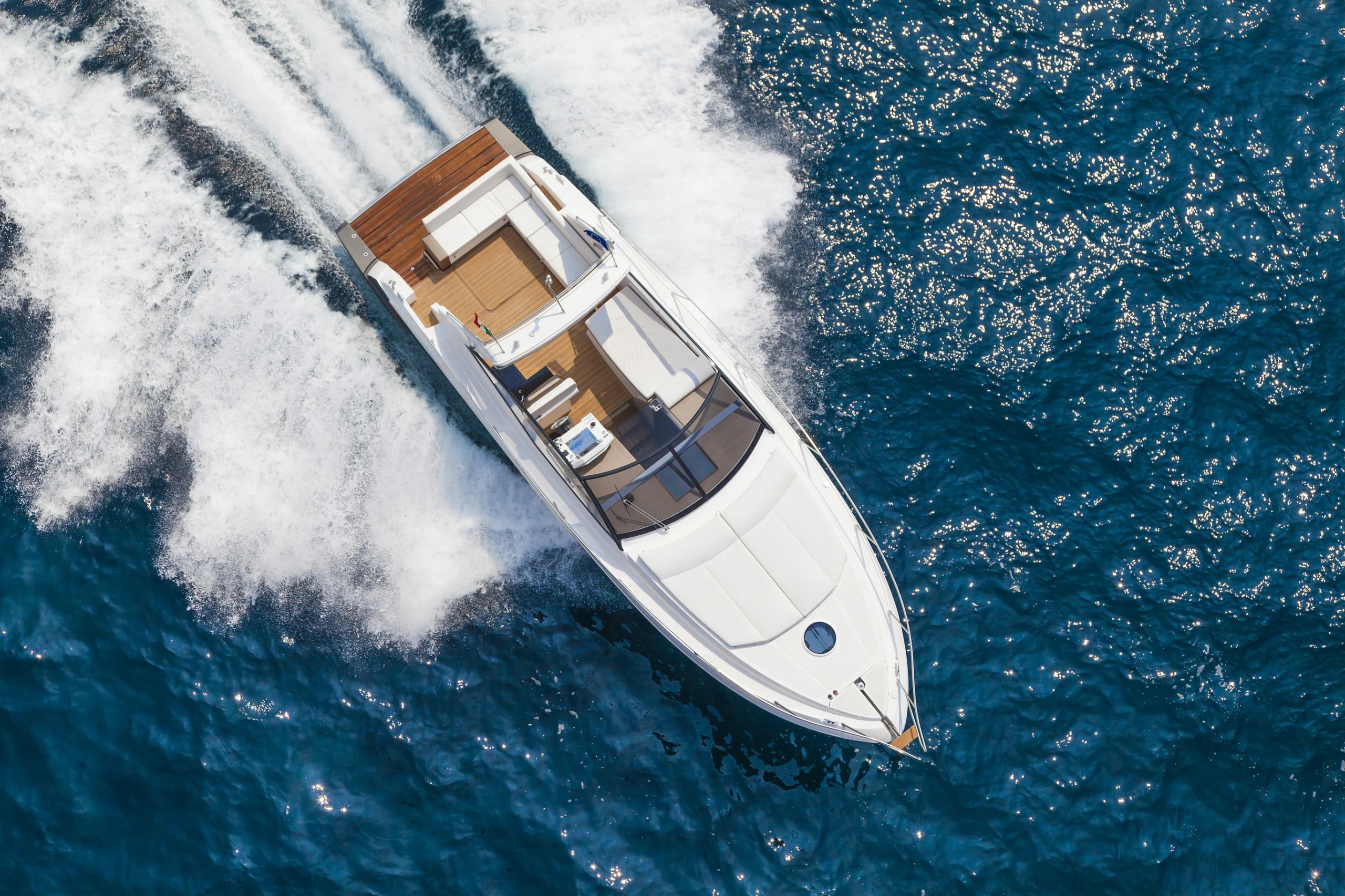
While yacht definitions vary, given the nature of the industry, we describe yachts as recreational watercraft designed for leisure, cruising, or racing. They are differentiated by function, propulsion, and size. Propulsion refers to the mechanism or system that propels a vessel across water.
Motor yachts and sailing yachts are the two main types of yachts, and both can range from mini (20 ft) to giga (350+ ft) in size. Additionally, the only propulsion categories are sail, motor, or hybrid, and every yacht will fall into one of these categories.
In general, the average yacht size is at least 33 feet long and can exceed 200 feet, though, as previously mentioned, some mini yachts start around 20 feet. The average privately owned yacht is between 35 and 70 feet.
Standard motor yachts are typically between 40 and 90 feet long and powered by engines (usually diesel) for extended cruising. Meanwhile, sailing yachts are primarily powered by, you guessed it, sails, and can range from 30 to 100+ feet, depending on the vessel.
Hybrid yachts — dual-propulsion vessels that can switch between electric power and a traditional engine — are more eco-friendly watercraft that allow flexibility between shorter and longer trips.
What Makes a Boat a Yacht, Anyway?
© Emmanouil Pavlis | Dreamstime.com
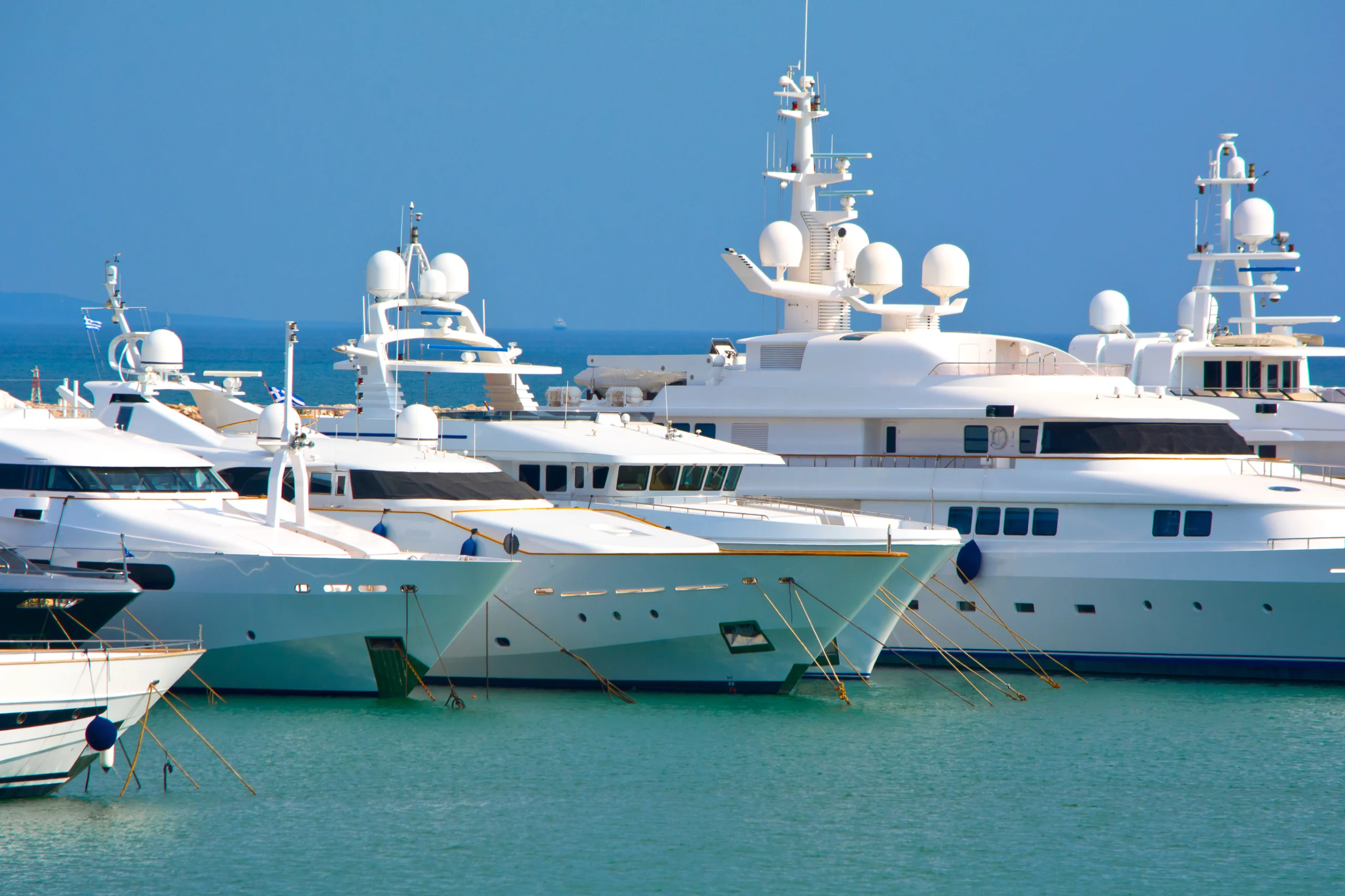
Now that we’ve narrowed down what defines a yacht, you might be wondering what makes a boat a yacht. In plain sailing terms, a boat is a vessel that transports across water, and can come in a wide variety of types and sizes. Engines, oars, or sails propel these watercraft. They are specifically designed to repel water, remain buoyant, and promote propulsion.
Because a boat encompasses any floating vessel for water travel, a yacht is inherently a (rather large) boat. But given the broad nature of boats, not all boats are yachts. So, when does a boat stop being just a boat, and what is considered a yacht?
The jury is out on exactly when a boat becomes a yacht, but the consensus is that any private leisure boat over 33 feet can generally be considered a yacht. However, when considering mini yachts, a boat can enter yacht territory beginning as low as 20 feet. Anything above 40 feet is typically a sure thing.
Another factor that distinguishes boats from yachts is intended use. Yachts are typically intended for private, pleasure cruising and are designed to cover long distances. They are also equipped with far more space and luxurious amenities than your average boat. Also, while not always the case, yachts are frequently professionally crewed. Meanwhile, boats are owner-operated more often than not.
Cost is, naturally, another characteristic shedding light on the difference between a boat and a yacht. The smallest yachts on the market — mini yachts — cost an average of $125,000, while mid-size yachts can run between $1 and $11 million. In comparison, a 20-foot boat costs between $10,000 and $60,000.
Motor Yacht vs. Sailing Yacht…What’s the Difference?
© Ivan Pilipenko | Dreamstime.com
We’ve briefly discussed sailing yachts vs. motor yachts, but now it’s time to get more granular. Propulsion is the main difference between a motor yacht and a sailing yacht, but what does that mean, exactly?
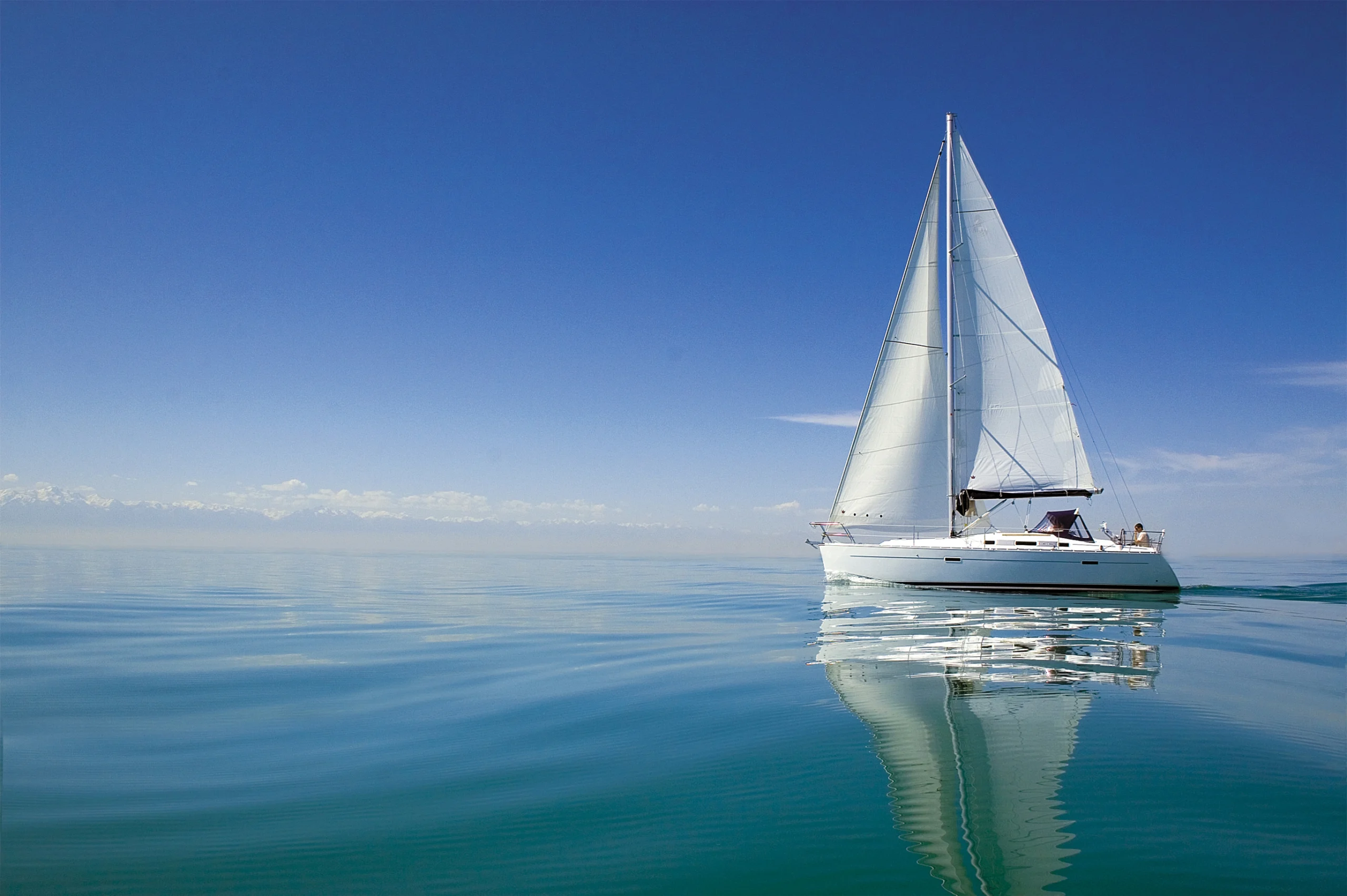
In simple terms, motor yachts rely on diesel or gas engines to propel them, while sailing yachts harness wind power with sails. Because of their powerful engines, motor yachts are usually faster than sailing yachts and require less skill to maneuver. Though sailing yachts can move incredibly quickly when handled well in the right weather conditions.
Another consideration when it comes to motor and sailing yachts is cost. Motor yachts are significantly more expensive to own and operate than similarly sized sailing yachts due to their large, complex engines, which require high fuel consumption and maintenance. Sailing yachts, on the other hand, are a more cost-effective option given their typically lower purchase prices and reduced maintenance-related expenses.
Now that we’ve covered the technical differences between sailing and motor yachts, let’s explore which is best suited for which lifestyle. For lovers of all things traditional and the art of slow travel, you’ll be hard-pressed to find a better option than the sailing yacht. This sustainable style is perfect for a Mediterranean yacht charter or Caribbean yacht charter, can navigate shallow waters with ease, and promotes a one-with-nature mentality.
However, if you’re looking to cover a lot of ground (or should we say water?) in a short period of time, the motor yacht is the vessel for you. These yachts are easier to operate, perform well in a variety of weather conditions, cruise quickly and efficiently, and typically have more amenities and space. At the end of the day, the choice between motor and sailing yachts boils down to time, skill, and preference.
What Is a Catamaran?
© Ruth Peterkin | Dreamstime.com
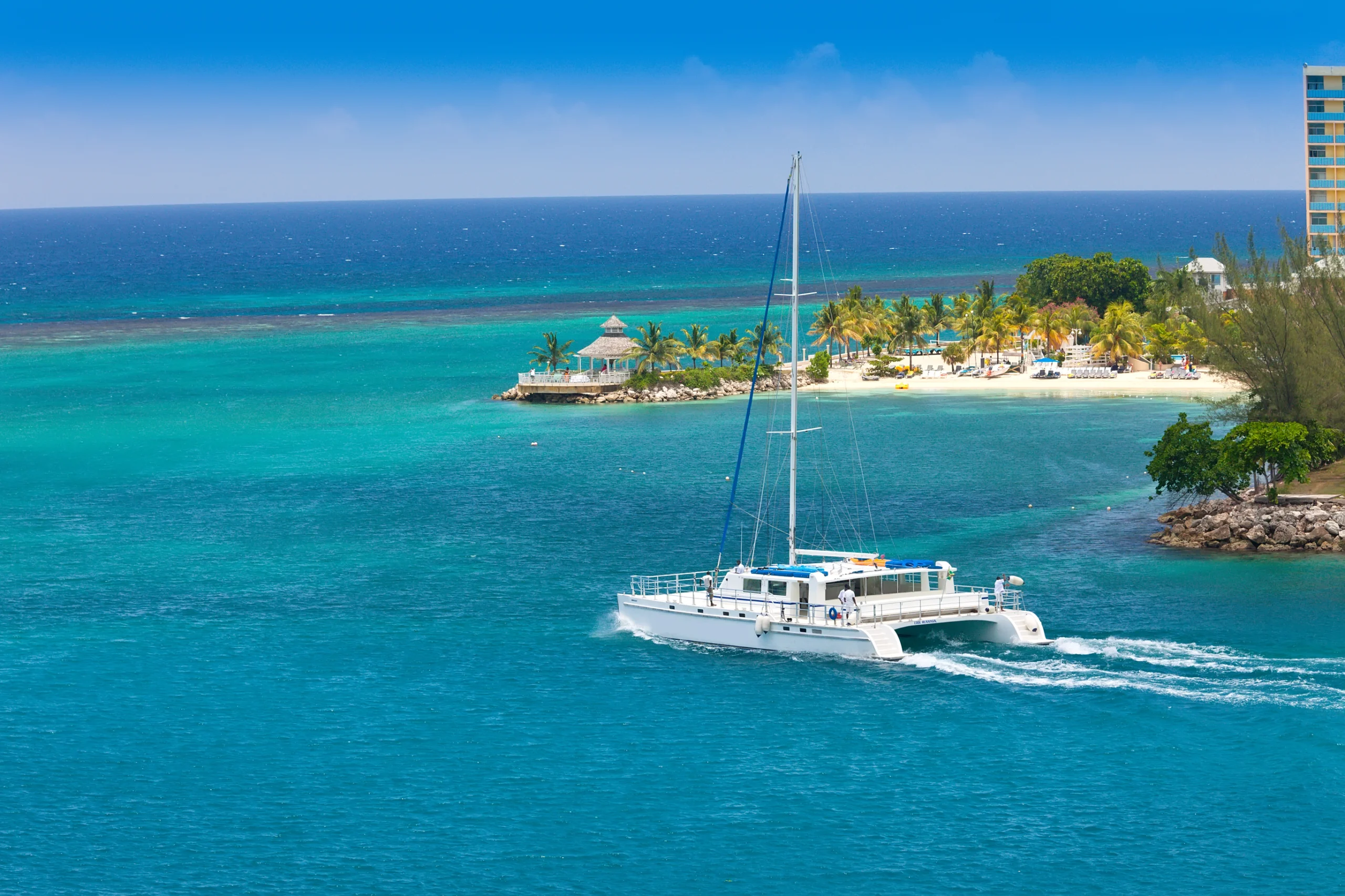
Moving on to common types of yachts, we begin with the classic catamaran yacht. A catamaran is a watercraft with two parallel, identical hulls — the watertight body of a boat — joined by beams. Twin hulls offer many advantages over monohull boats, like greater balance, speed, and durability. Another bonus of a catamaran’s dual hulls is increased spaciousness.
Then, there is the catamaran’s relative, the trimaran, boasting three side-by-side hulls. These high-performance vessels operate at even higher speeds than catamarans and are renowned for their stability. They can also pivot more quickly than their twin-hulled counterpart.
The two main types of catamaran yachts are sailing catamarans and power catamarans. As with most yachts, sailing catamarans are generally cheaper and have a more classic appearance than power catamarans, though motor-powered options are quicker and easier to work with.
Both sailing and power catamarans can sail in both freshwater and saltwater, making them ideal for fishing, sailing, and leisure. Because they are lighter, require less fuel, and maneuver more seamlessly than their monohull counterparts, they’re an excellent choice for navigating shallow water and choppy seas.
In terms of size, a small catamaran yacht starts around 30 feet, though mid-size between 40 and 50 feet is most common.
What Is an Explorer Yacht?
© Smallredgirl | Dreamstime.com
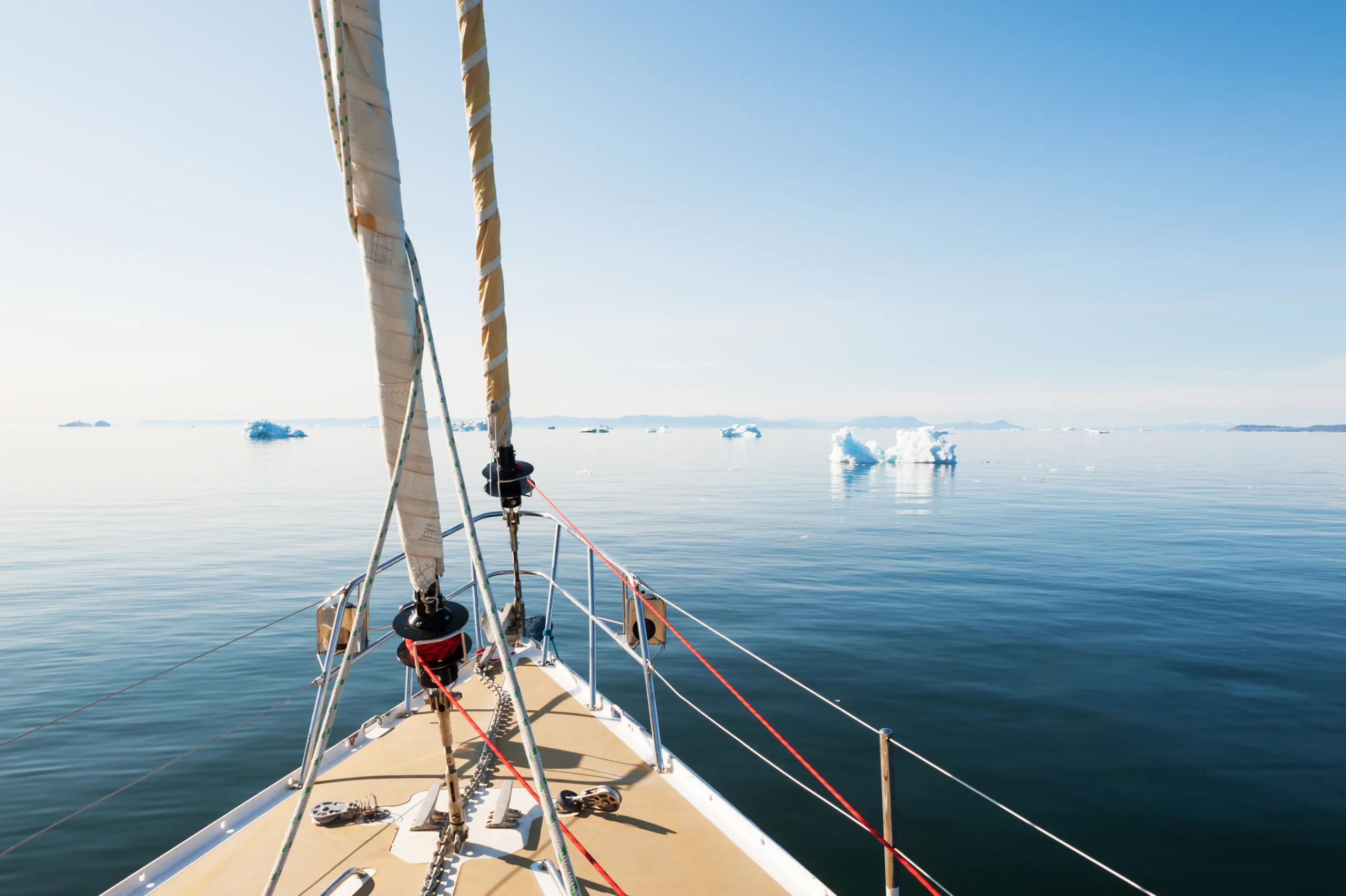
Explorer yachts — often used interchangeably with expedition yachts — are durable vessels built to withstand rough seas and cross oceans unsupported. They can take the form of sailing or motor yachts, possess extensive storage, maneuver incredibly well, and are highly fuel-efficient.
Both explorer and expedition yachts are designed to excel at long-range, autonomous cruising to hard-to-reach locations. They are the epitome of rugged adventure combined with luxury, making them an ideal option for crossing oceans, navigating polar regions, conducting research, and more. Their hulls are typically made of aluminum or steel, making them extra sturdy.
The average explorer yacht size is between 80 and 130 feet, which is considered small. The largest explorer yachts can reach 450+ feet.
Interestingly, while all expedition yachts can be classified as explorer yachts, not all explorer yachts can be classified as expedition yachts. Why? Well, it all comes down to purpose and cruising capability.
Some experts say a true explorer yacht should be able to travel 2,600 nautical miles on one tank of diesel; others say the number is nearly double at 5,400 nautical miles. Expedition yachts, on the other hand, should be capable of traveling much, much farther.
Expedition yachts also differ from explorer yachts in that they are designed for very specific purposes, such as scientific research or marine exploration. They also require a high level of self-sufficiency to operate in areas lacking infrastructure.
What Is a Sport Fishing Yacht?
© Darleen Warnes-stry | Dreamstime.com
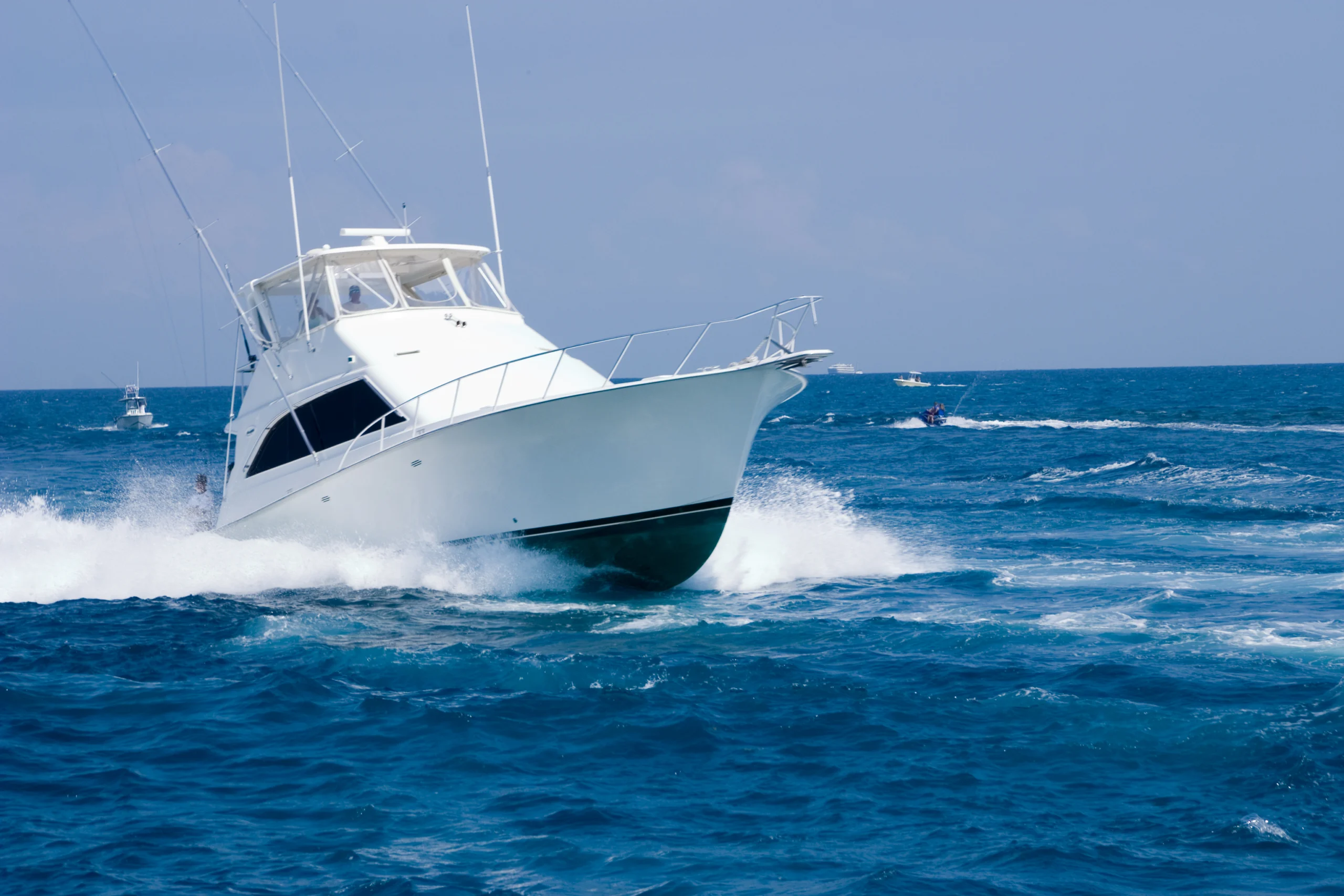
Similar to explorer yachts, the sportfishing yacht (AKA the sportfish yacht or sportfisher yacht) is built for a very specific purpose: fishing. They are designed with powerful engines that prioritize distance and durability over sheer speed, making them the perfect pick for longer offshore excursions.
Their ability to withstand the open ocean positions them as the best option for deep-sea fishing, weekend fishing trips, and offshore cruising. With options such as express sportfish yachts, flybridge sportfish yachts, convertible yachts, sportfishing catamarans, and center console sportfishers, the world is your oyster when it comes to your preferred style and activity.
Specialized fishing equipment, such as outriggers, downriggers, tackle stations, rod holders, live wells, and fighting chairs, is common on sportfisher yachts. Many also often possess flybridge tuna towers for increased visibility, long decks that offer an open layout for pulling in large game fish like tuna or marlin, and a spacious cockpit for storage. Sonar, radar systems, and underwater cameras are also common.
The typical size range for a sportfisher yacht is between 30 and 80 feet, but can exceed 100 feet. In terms of cruising speed, these vessels can range from 25 to 30 knots, though 40 is possible.
Super Yacht vs. Mega Yacht — The Lowdown
© Ricardo Pilguj | Dreamstime.com
Remember when we said there’s no clear answer to the question: what makes a yacht a yacht? Well, the same goes for “What is a superyacht?” and “What is a mega yacht?” — sort of.
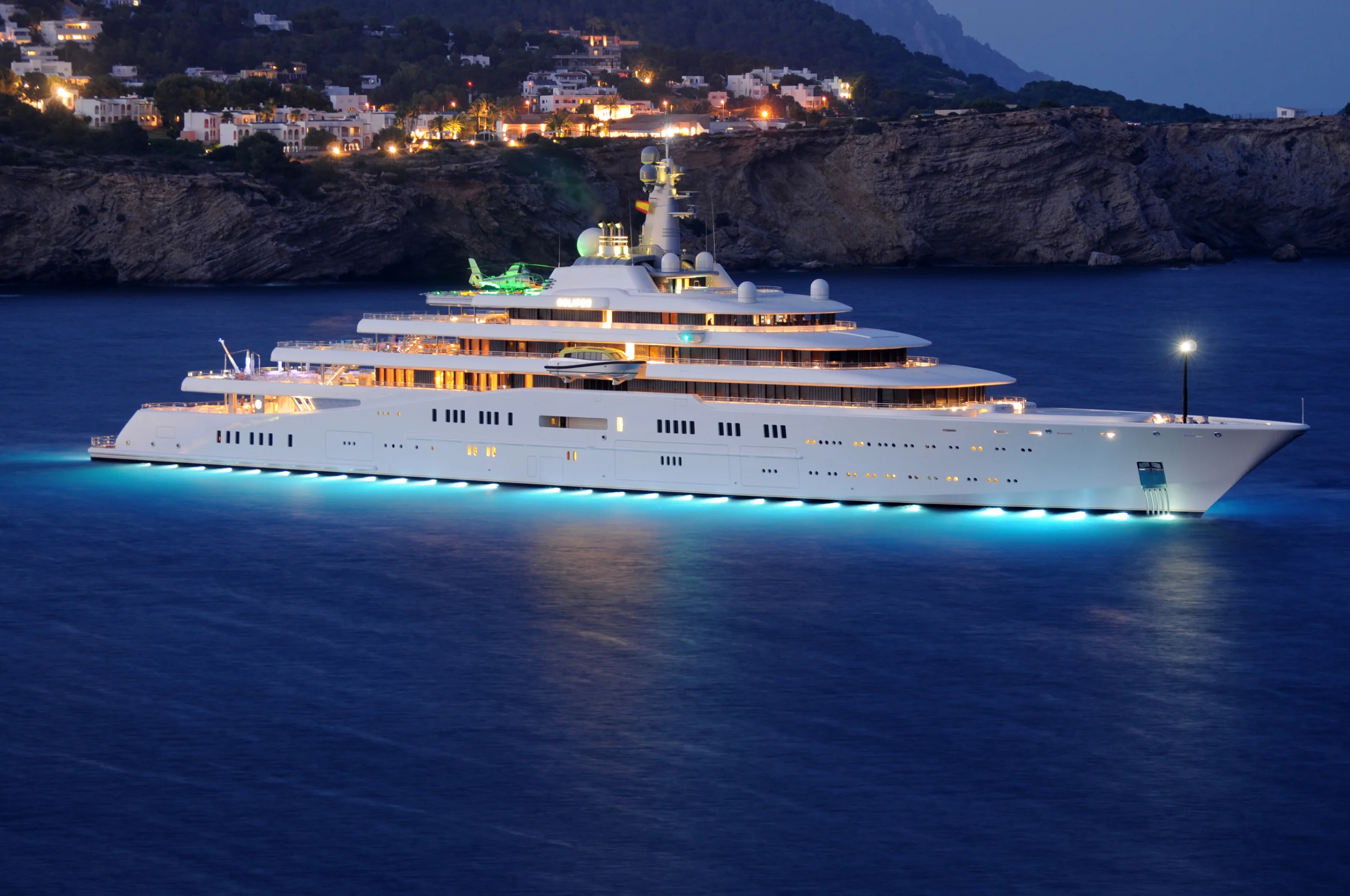
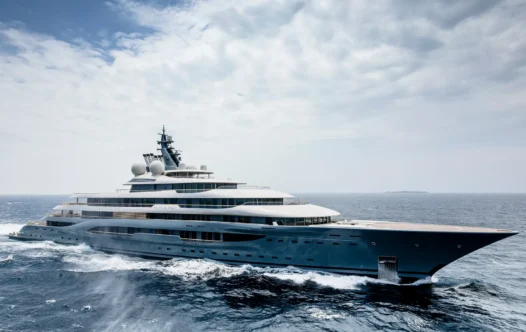
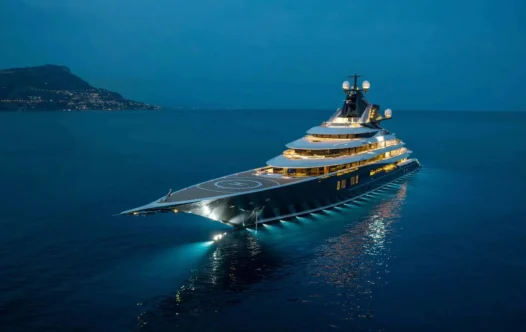
On the surface, superyachts and mega yachts are recognized by their ultra-luxe amenities and gargantuan size, often boasting multiple decks with everything from spas to swimming pools to cinemas. Additionally, they can come equipped with helipads, jet skis, and even submarines.
But the exact size that makes a yacht “super” or “mega” is where it gets murky.
Currently, no official size guidelines exist that explicitly specify when a yacht becomes a superyacht (super yacht) or mega yacht. Fortunately, there are a few general rules of thumb that can help us ascribe labels.
While some modern superyachts start at around 100 feet, they typically range from 120 to 200 feet. However, some superyachts start at 80 feet. Meanwhile, mega yachts usually range from 200 to 350 feet, with any yacht exceeding 350 feet entering gigayacht territory.
Another factor that helps distinguish superyachts from mega yachts is crew size. Given their sheer luxury and magnitude, superyachts and mega yachts are both professionally crewed vessels. However, because mega yachts are far larger than superyachts, they often require a much more extensive crew to operate and maintain. Depending on the yacht’s size, a mega yacht crew can exceed 100 people.
As you can imagine, cost also sets superyachts and mega yachts apart. According to our research, the average motor superyacht costs $36 million, and the average sailing superyacht costs $27 million. Meanwhile, most new motor mega yachts average a whopping $83 million. New sailing mega yachts, on the other hand, cost around $53 million.
Test Your Yacht Knowledge With a Charter
For a question as seemingly simple as “What is a yacht?” the answer sure was exhaustive! From nailing down a hard definition to distinguishing motor and sailing yachts to covering the most common types of luxury vessels, it’s clear that industry terminology is incredibly complex and often quite vague. But now that class is no longer in session, it’s time to sit back, relax, and put this knowledge to the test the best way possible — on the water.
No matter your preference, whether it be a catamaran, a sportfisher, or even a mega yacht, Yacht.com has the perfect yacht for you to charter. Or, if you’re still hungry to learn, check out our comprehensive guides about yacht charter costs and how much yachts cost. Whatever questions you may have, we’ve got you covered.
Sources
This comprehensive guide is an amalgamation of in-depth industry research and extensive documentation review. All technical terminology and specifications, from price ranges to sizing/dimensions, were meticulously cross-referenced and verified across leading luxury marine leisure market sources.
Fair Use
When using this data and research, please attribute by linking to this study and citing Yacht.com.
More articles

Ready to set sail?
Discover the perfect yacht charter for you — effortlessly with Yacht.com.


