Svalbard: Your Guide to the Ultimate ‘Coolcation’ Yacht Charter
Escape the heat with a Svalbard yacht charter. Explore glaciers, polar bears, and Arctic ghost towns on this 10-day coolcation itinerary from Longyearbyen.
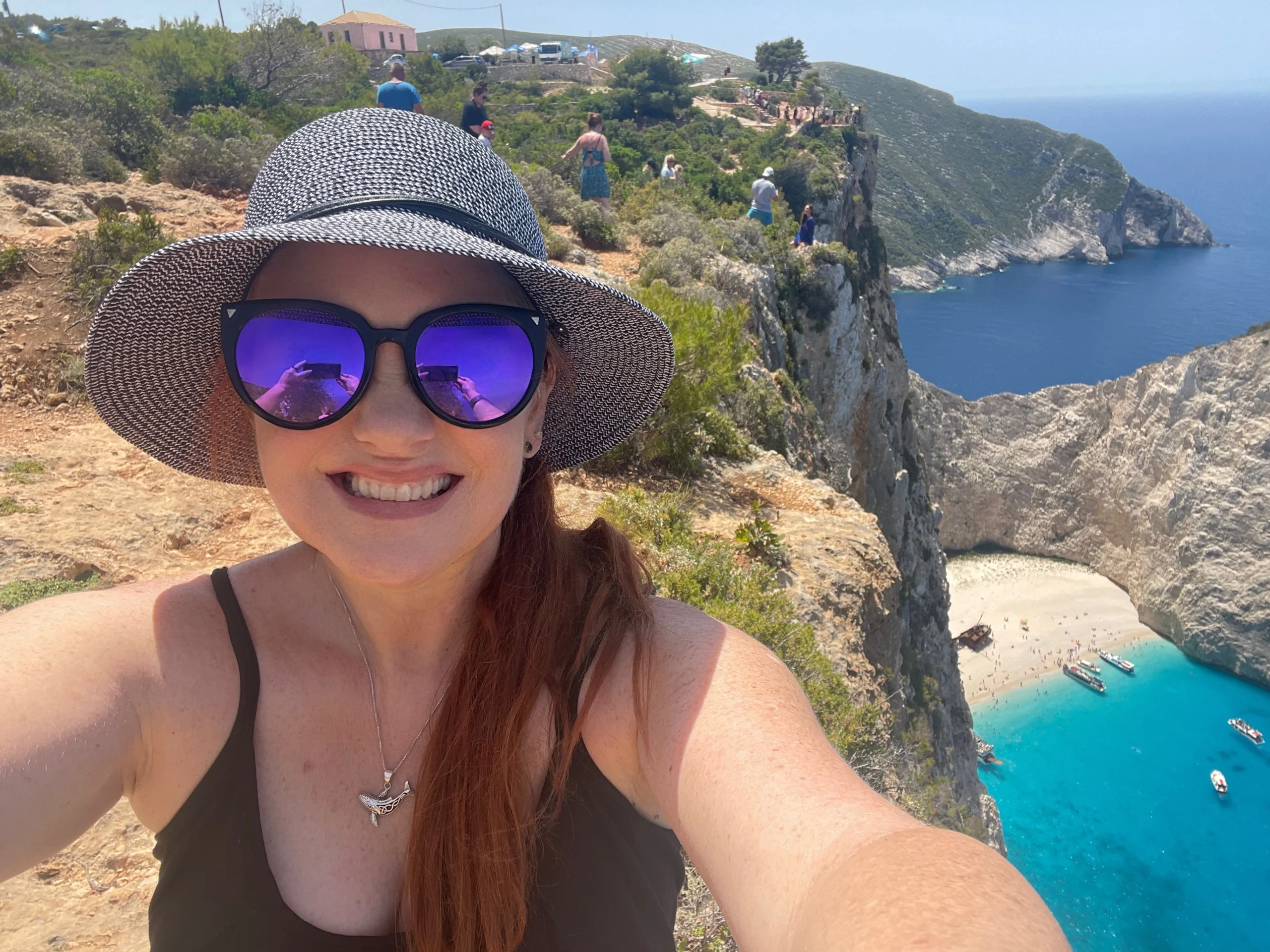
Taking a “coolcation” has become a popular travel trend, an antidote to those sweltering, tropical hotspots. Many are swapping the extreme heat for crisp air and milder temperatures in remote, nearly untouched environments, making Svalbard one of the ultimate coolcation destinations. Located about midway between the northern coast of mainland Norway and the North Pole, it’s among the world’s northernmost permanently inhabited regions. It also happens to be perfect for a yachting experience under the Midnight Sun (from roughly mid-April to mid-August), bringing 24 hours of daylight.
On a yacht charter, you’ll have the best (and safest) vantage point for viewing unique Arctic wildlife, from walrus colonies that haul out on remote beaches to polar bears floating on pack ice and whales, including humpbacks and belugas. While in your vessel, you can linger at awe-inspiring glaciers, access narrow channels and fjords that are inaccessible to traditional cruise liners, and venture into some of the wildest, most magnificent Arctic landscapes.
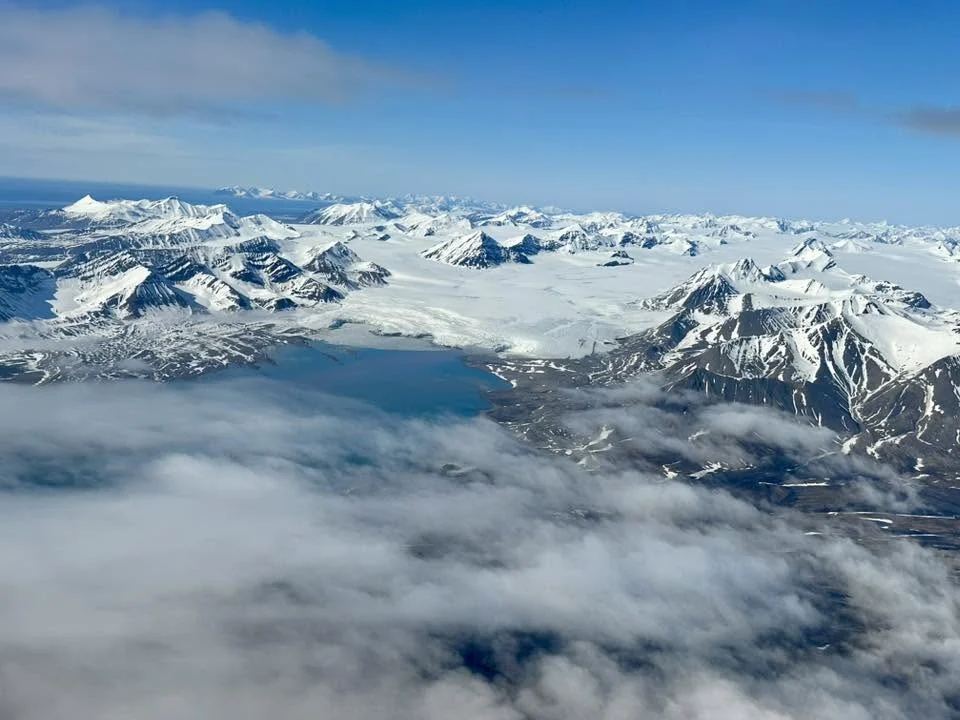
Photo courtesy of KC Dermody
To begin this once-in-a-lifetime journey, fly to Longyearbyen, with direct flights available from Tromso. From here, you can sail round-trip, exploring the island of Spitsbergen and some of the smaller islands of its coast on a 10-day circumnavigation.
Day 1: Embarkation at Longyearbyen
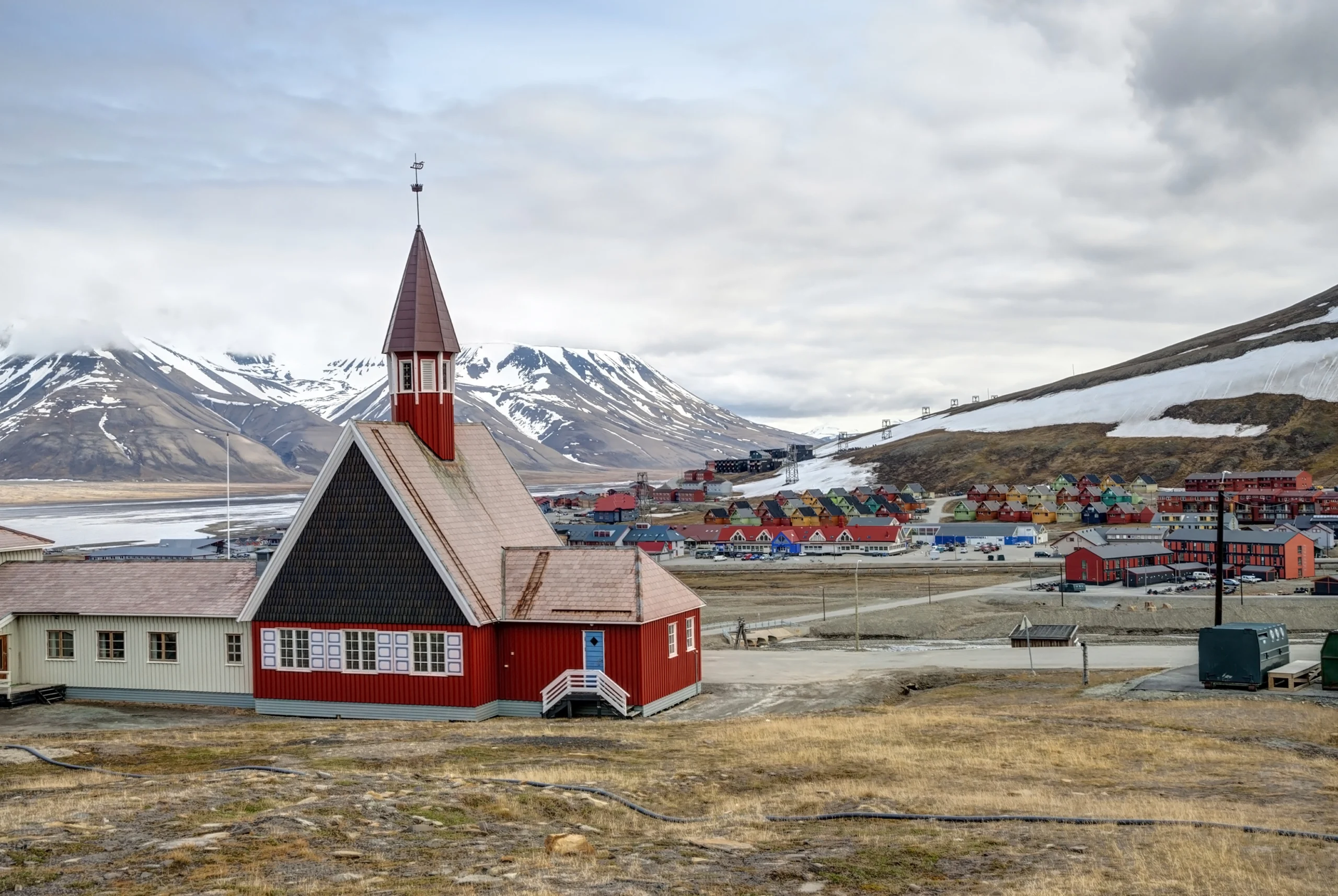
Photo by © Dinozzaver | Dreamstime.com
After flying into Longyearbyen’s airport, you could step aboard your yacht soon after, but it’s best to arrive at least a day early to take advantage of all the main settlement has to offer. Plus, you’ll have some cushion time in case there are weather-related issues that prevent a landing. Fog and low clouds are very common in the summer.
You might sip coffee at Cafe Huskies, the world’s northernmost cafe, while getting to know its famous resident huskies. Afterward, learn more about the dramatic history of early polar exploration at the North Pole Expedition Museum and some 400 years of Arctic history at the Svalbard Museum. It’s also possible to hike to the futuristic exterior of the world’s crop seed backup, the Svalbard Global Seed Vault.
If you like a good pint, don’t depart Longyearbyen without visiting Svalbard Bryggeri. The world’s northernmost commercial brewery, it’s famous for its brew made using 2,000-year-old glacier ice. After embarkation, sail past the soaring cliffs of Fuglefjella (Bird Mountain). As the name suggests, this is a massive breeding ground for Arctic seabirds, with hundreds of thousands of them here during the summer, including Atlantic puffins. You can anchor at Colesbukta on the southern side of Isfjorden. Well-protected from the Arctic winds, it lies between Fuglefjella and Barentsburg.
Day 2: Isfjorden & Pyramiden, a Russian Ghost Town
Cruise Norden Isfjorden, part of the large, central fjord system of Svalbard, and the ecological and cultural heart of the archipelago. The national park spans over 1,140 square miles and protects the pristine coastal landscape and marine areas. It’s a prime habitat for Arctic foxes, ringed seals, and Svalbard rock ptarmigan.
After exploring the park, anchor near the well-preserved and rather eerie Soviet mining settlement of Pyramiden. Visiting is a surreal journey back in time. Due to the permafrost, the town remains largely as it was when evacuated in 1998. See the Cultural Palace with its grand piano, library, and gymnasium, and the grand dining hall where miners once ate. There’s also a monument to Lenin in the town square that’s become a popular photo op, along with an abandoned pool that offers a photogenic contrast against the Arctic backdrop.
Day 3: Ny-Ålesund
In Ny-Ålesund, you can visit the museum to learn about the region’s mining past, send postcards home from the world’s northernmost post office, and see the historic mooring mast where Roald Amundsen tethered the Norge airship before completing his successful 1926 North Pole expedition. This was a legendary base for historic Arctic expeditions, rich in culture and wildlife. That said, you’ll need an armed guide to accompany you ashore due to the presence of polar bears.
Day 4: Fjortende Julibreen Glacier & Walrus Colonies
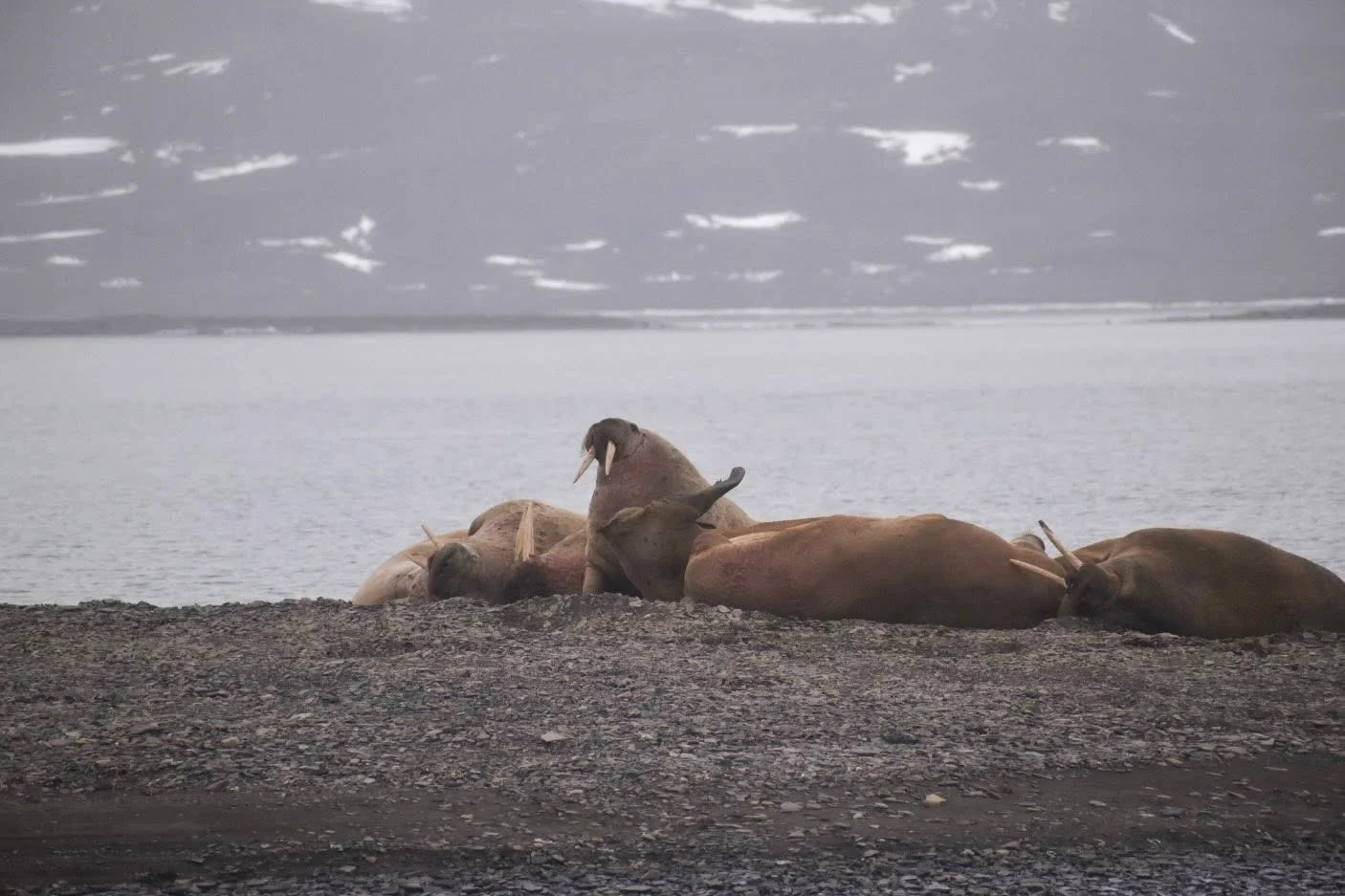
Photo courtesy of KC Dermody
The Fjortende Julibreen (14th of July) glacier, named to honor France’s Bastille Day, covers roughly 49 square miles, stretching from Haakon VII Land down to the sea. Enter Krossfjorden and then hop in a Zodiac to cruise along the active calving glacier (just not too close). Watch for the many birds that inhabit the Casimir-Périerkammen cliffs, including northern fulmars, kittiwakes, guillemots, and Atlantic puffins. As the slopes and beach ridges beneath are vital nesting areas for pink-footed geese, it requires quiet, careful navigation.
Another highlight in the area is Poolepynten, one of the most famous and most accessible haul-out sites for walruses. The massive marine mammals congregate here in large numbers.
Day 5: Whaling Relics & The 80th Parallel
Navigate toward the small, uninhabited islands of Danskøya and Amsterdamøya, located off the extreme northwestern coast of Spitsbergen. Stop at Virgohamna, a historic, sheltered bay on the northern coast of Danskøya. Once a major base for early Arctic industries, it’s one of the most prominent sites for 17th-century Dutch whaling relics. That includes the foundational ruins of blubber ovens, used to render whale blubber into oil during the 1630s, and whaler graves from the same period. Virgohamna’s name comes from the freighter Virgo, used by Swedish engineer Salomon August Andrée as the launch base for his ill-fated North Pole hot-air balloon expedition in the late 19th century. Remnants of his balloon hangar and other polar exploration artifacts are scattered nearby.
Across the strait on Amsterdamøya, you’ll find Smeerenburg, which translates to “Blubber Town.” It was the largest and most famous Dutch whaling settlement in Svalbard. From here, your vessel can attempt to cross the legendary 80°N parallel.
Day 6 & 7: Hinlopen Strait & the Bird Cliffs of Alkefjellet
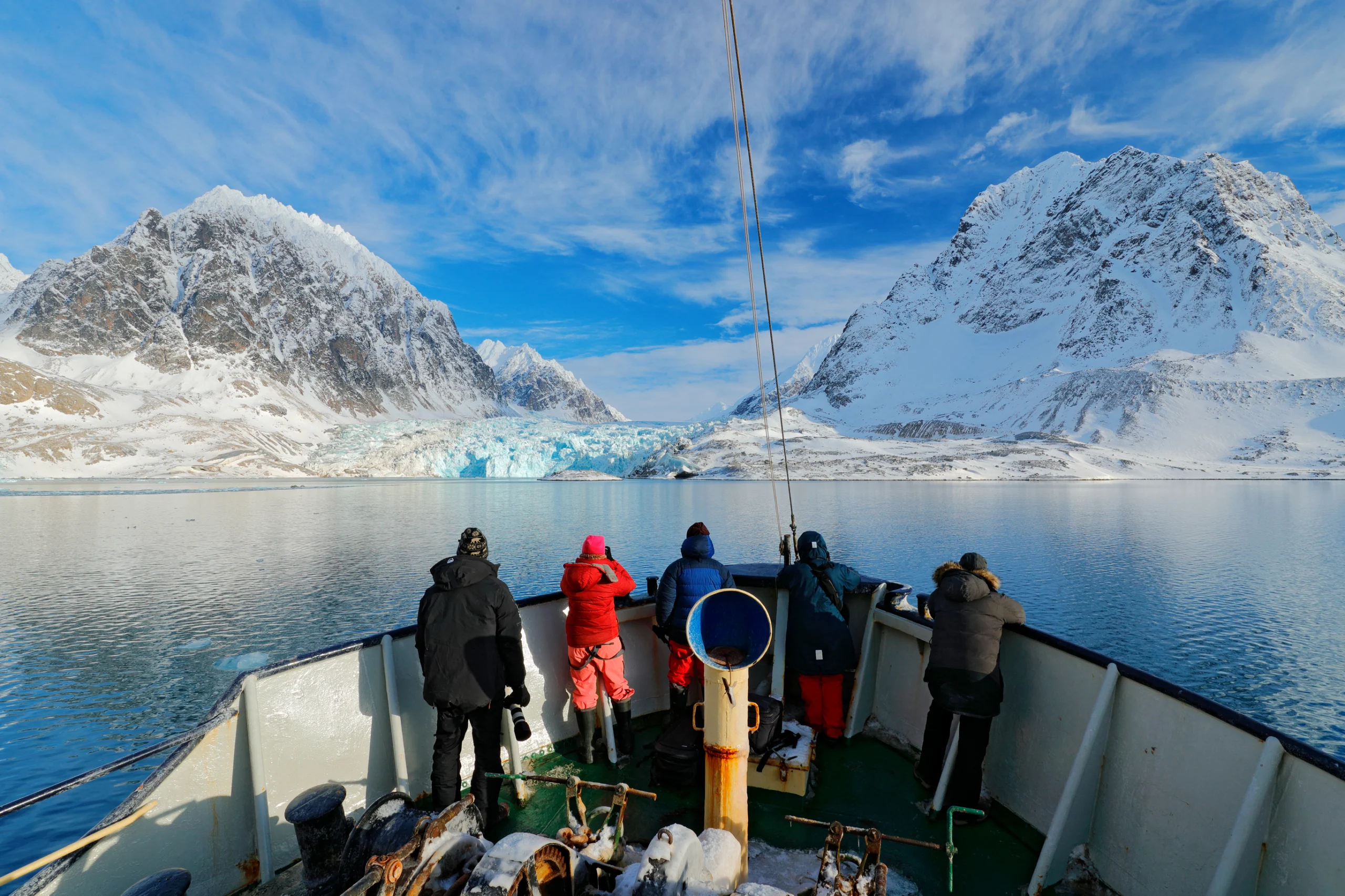
Photo by © Ondrej Prosicky | Dreamstime.com
With so much to see around the Hinlopen Strait and the waters around Nordaustlandet, you’ll want to spend a couple of days in the area, guaranteeing an extraordinary Arctic charter. In this remote corridor that separates Spitsbergen from Nordaustlandet, you’ll sail along the pack ice edges, scanning for roaming polar bears and vast seal colonies among the drifting ice. There are also famously massive bird colonies at Alkefjellet, a nearly 4.5-mile-long, 328-foot-high basalt cliff. It’s home to one of Svalbard’s largest breeding sites for seabirds. Among the noisy wildlife display, you might also see an Arctic fox scavenging the rocky ledges.
As you sail along the southern coast of Nordaustlandet, you’ll encounter Bråsvellbreen Glacier, a stunning 20-mile-long ice wall where the glacier calves into the sea with a thunderous crash.
Day 8-9: The Hornsund Fjord in South Svalbard
Hornsund is widely regarded as the most beautiful fjord in Spitsbergen. In this pristine Arctic wilderness, glacial valleys cut through towering, jagged mountain peaks. A quintessential expedition stop, there are historic relics, bird cliffs, and calving ice fronts. Some of the top photo ops include Hornsundtind, an over 4,688-foot pyramid-shaped mountain dominating the southern shore. Bautaen is another highlight. A nearly 1,600-foot monolith-like peak, it’s located near the entrance to Brepollen glacial bay. This is where you’ll also see the vast, active glacial fronts of Hornbreen, Storbreen, and Samarinvågen. By hopping in a Zodiac, you can get closer to the edge of the ice to witness and hear the booming sounds of calving.
The waters of Hornsund are a prime spot for marine mammal encounters. Keep watch for bearded seals and ringed seals that lounge on the ice floes. Polar bears can sometimes be seen roaming the sea ice or along coastal areas, while beluga whales may be spotted in the frigid waters. There’s plenty of birdlife to witness as well. Gnålodden is a huge seabird cliff where you’ll probably hear the thousands of kittiwakes and guillemots well before you approach. As the tundra below is rich in nutrients, watch for Svalbard reindeer and Arctic foxes that often graze here.
There’s even more in this fjord, with 400 years of human history. There are historic expedition sites and remnants of whaling camps at Gåshamna. Plus, you can see Isbjørnhamna, the base of a Polish Polar Station where Arctic research is conducted by scientists year-round. Gåshamna also provides the best anchorage on the south side of Hornsund fjord as it’s protected from southern winds and swells.
Day 10: Return to Longyearbyen
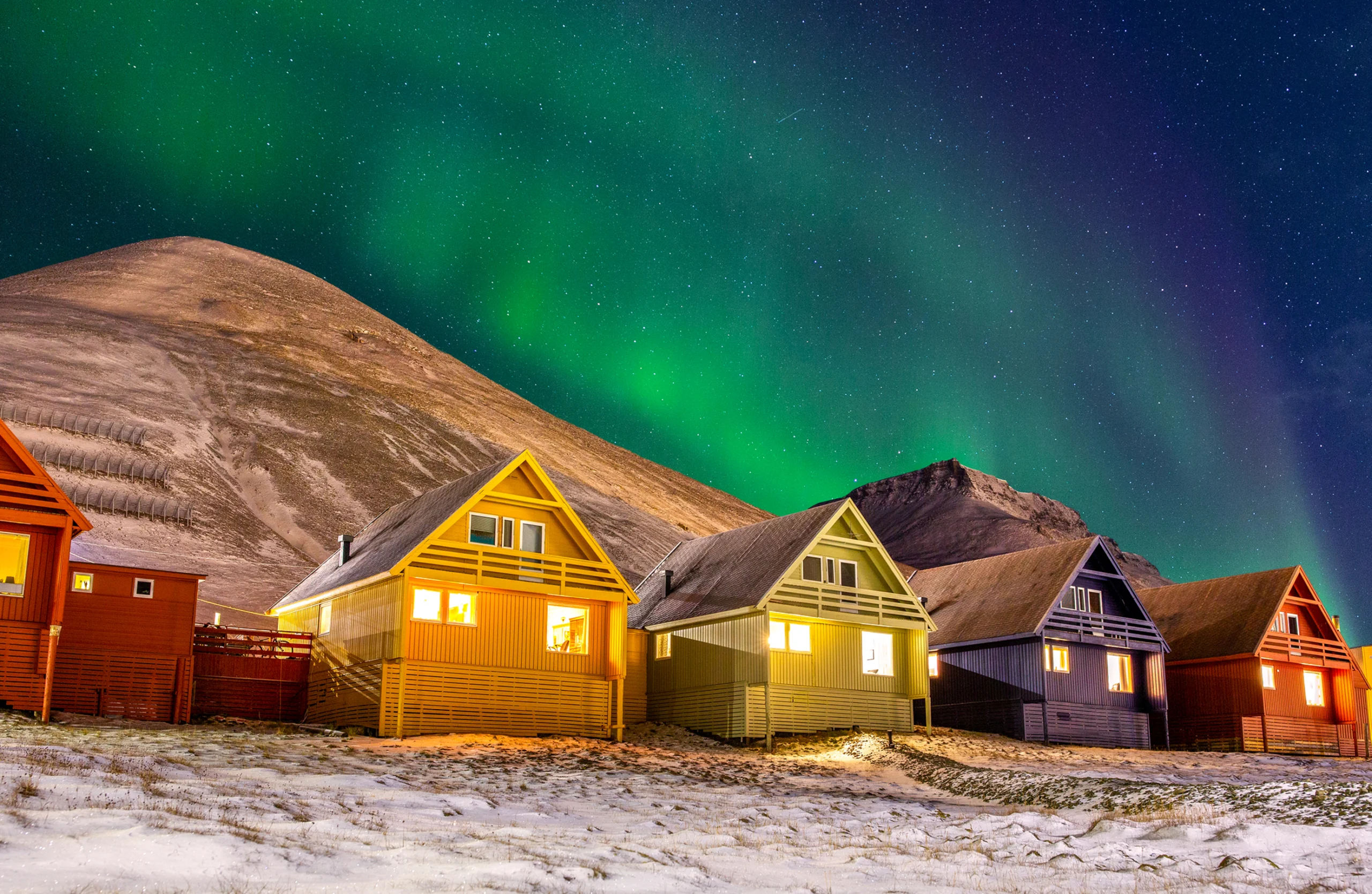
Photo by © Martinmates | Dreamstime.com
Your return to Longyearbyen from Gåshamna covers roughly 40 to 50 nautical miles. You’ll round the coast of Sørkapp Land and sail into Bellsund before navigating north into the mouth of Isfjorden towards the Russian mining town of Barentsburg. If you’d like to visit this unique destination, which feels culturally and politically like a remnant of the Soviet era, you’ll need to pay port fees and gain docking permission in advance. While that’s an easy task, be aware that the port is notoriously unprotected from strong winds. That means attempting to anchor or dock should only be done if sea and wind conditions are calm.
Barentsburg is known for its Arctic architecture, modern visitor center, and unique historical monuments. It can be explored within a few hours, with highlights including the Barentsburg Pomor Museum, where you can learn about Pomor history, early Arctic explorers, and local wildlife. The St. Nicholas Orthodox Chapel makes a great photo op as a striking, traditional wooden church and one of the world’s northernmost places of worship. One of the most popular things to do is visit the post office to add rare passport stamps, recording your entry and exit to the settlement. Afterward, conclude your journey by continuing up the fjord for the short and scenic sail back to Longyearbyen.
More articles
Ready to set sail?
Discover the perfect yacht charter for you — effortlessly with Yacht.com.


