The Best Greek Islands for a One-Week Yacht Charter
Discover the Greek islands that reward a one-week yacht charter most — with the best anchorages, shoreside stops, and sailing regions.

A week in Greece feels, on paper, like a reasonable amount of time. Then you unfold the map. The country has more than six thousand islands, of which two hundred and twenty-seven are inhabited, and of those, several dozen are worth an entire trip on their own. The only way to approach this without paralysis is to accept, early, that you are not seeing Greece. You are seeing merely a part of Greece.
The itinerary below draws from three distinct sailing regions—the Cyclades, the Ionian, and the Dodecanese—selecting the islands that reward a yacht charter specifically: places where arriving by sea is the best way to arrive, where the anchorage itself is part of the experience, and where a week spent unhurriedly is both possible and advisable. None of these islands require a yacht to visit, but all of them are better for it.
The Cyclades
Paros
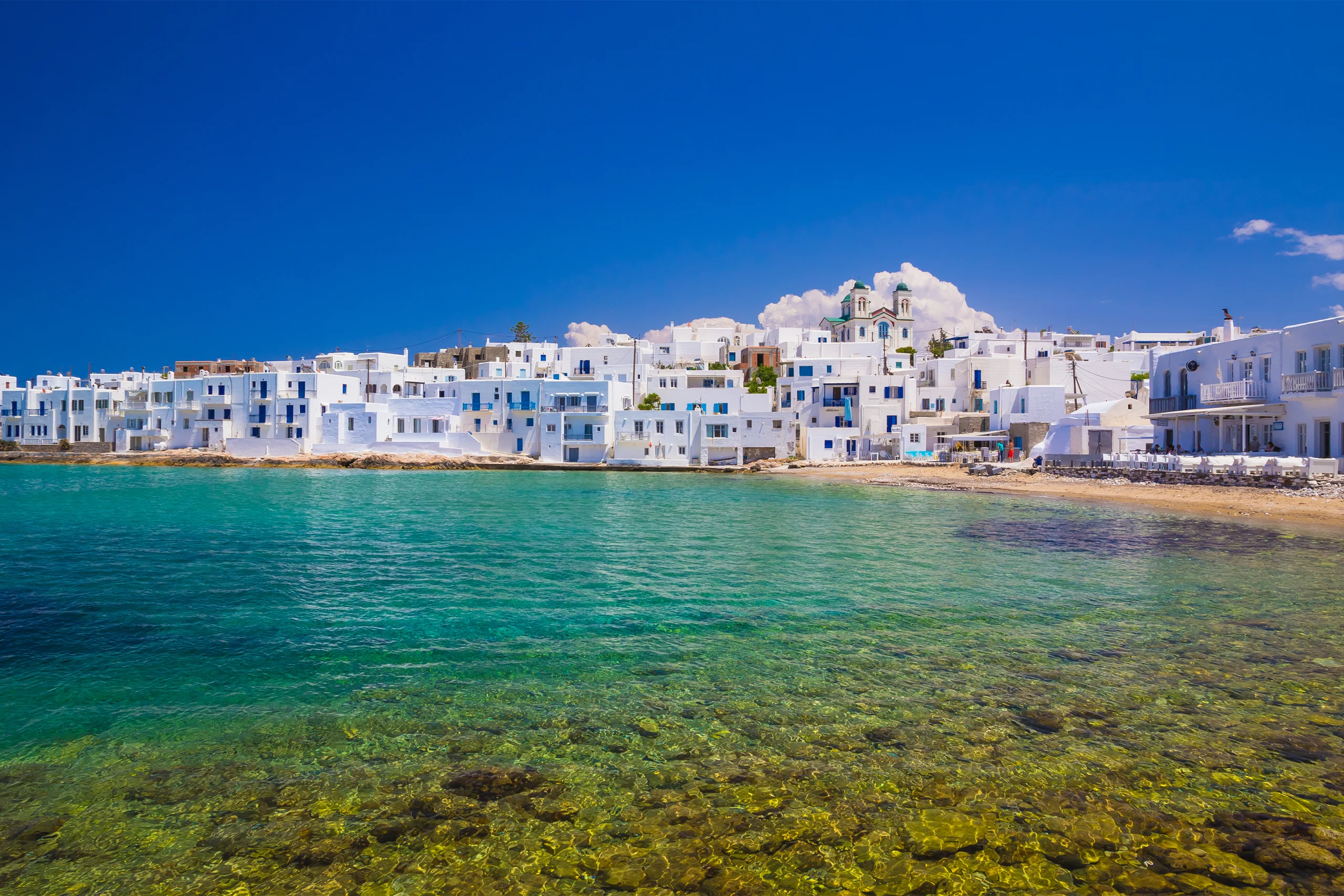
Photo by © Josef Skacel | Dreamstime.com
Mykonos is forty minutes away by ferry and exists in a different universe. Paros is quieter and less concerned with being seen. The main harbor at Parikia is functional and well-provisioned; the anchorage at Naoussa, in the north, is the reason to make the passage. A horseshoe-shaped fishing harbor of whitewashed houses and bougainvillea, Naoussa has managed the difficult trick of developing a serious restaurant scene without losing that authentic village feel. Eat at the waterfront in the evening, when the fishing boats return.
What to do ashore: Hire a scooter and make the thirty-minute ride to the Byzantine castle ruins at Kefalos and the ancient marble quarries at Marathi (the same quarries that produced the stone for the Venus de Milo and the Parthenon’s friezes). The quarries are largely unvisited and entirely atmospheric.
Naxos
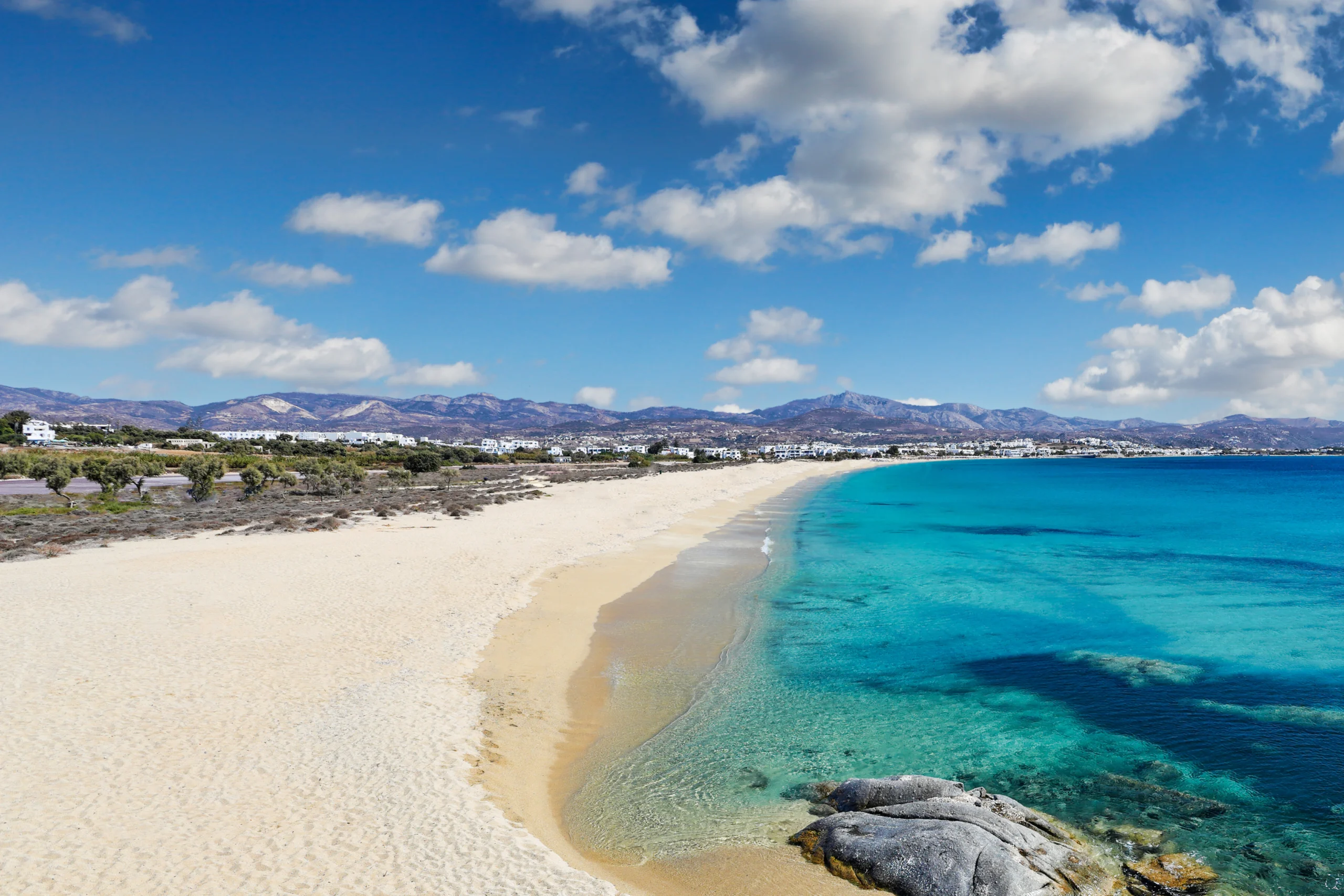
Photo by © Costas1962 | Dreamstime.com
The largest of the Cyclades and, by some measures, the most self-sufficient—Naxos produces its own potatoes, its own cheese, its own citron liqueur, and a beef that would hold its own anywhere in Europe. The harbor town of Naxos is dominated by a Venetian kastro built in the thirteenth century and a giant marble doorway, the Portara, standing on a small islet at the harbor entrance and connected to the town by a causeway. It is one of the more astonishing sights in the Aegean, visible from the water long before you arrive and no less striking for it. The island’s interior, with olive groves, Byzantine churches, mountain villages that have barely changed in centuries, rewards an afternoon by car or scooter.
What to do ashore: The village of Halki, in the island’s center, contains a restored Venetian tower, a distillery producing the local kitron, and a handful of excellent lunch spots. It takes about forty minutes from the harbor by car and feels like a different century entirely.
Folegandros
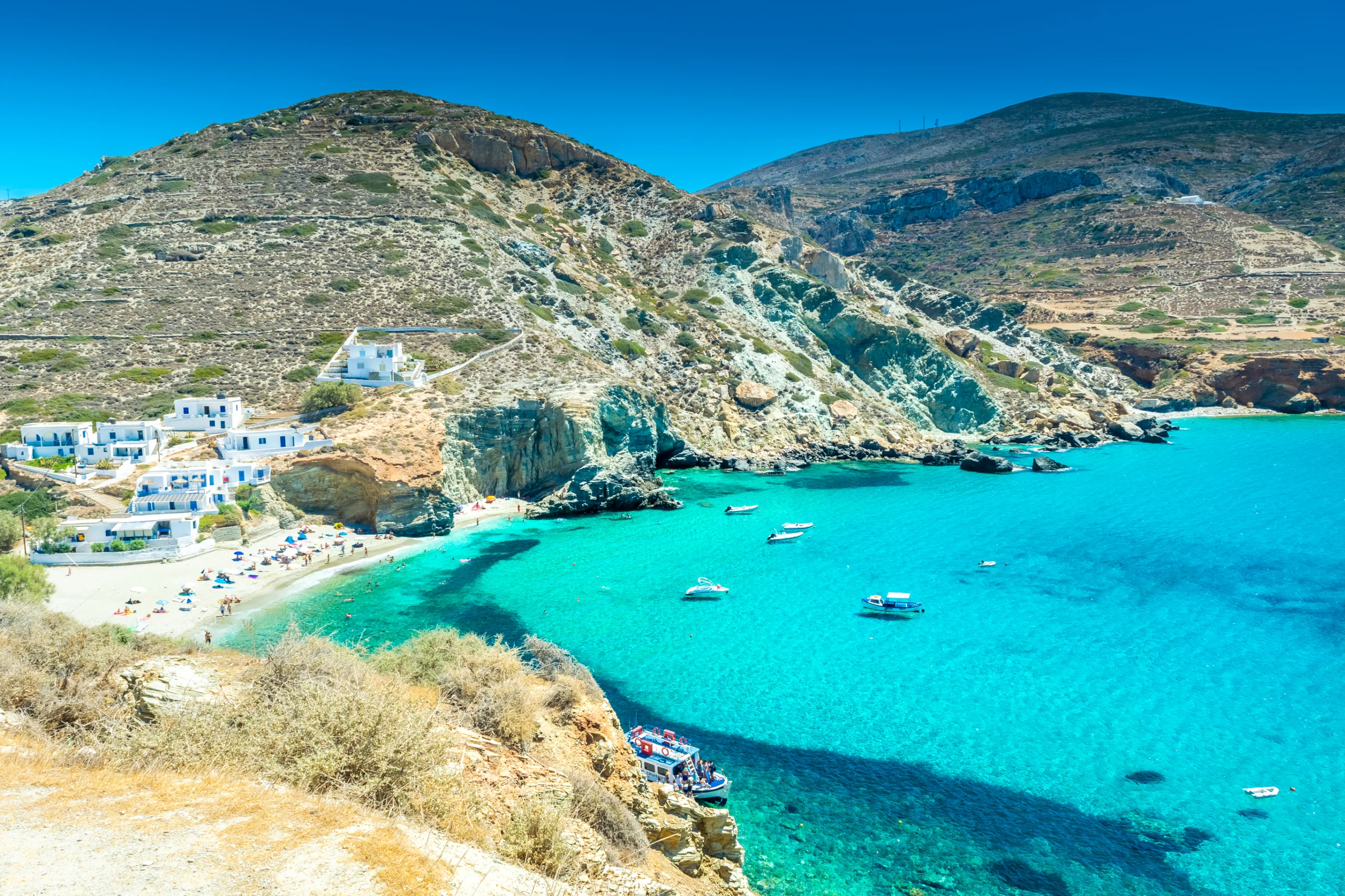
Photo by © Stefano Zaccaria | Dreamstime.com
Tiny, steep, and unhurried, Folegandros is the island you come to when you want the Aegean stripped of anything superfluous. There are no package tourists here, no beach clubs, no particular infrastructure for the kind of visitor who needs to be entertained. What there is: a clifftop chora—one of the most beautiful main towns in the Cyclades, its cubic white houses perched three hundred meters above the sea—and a succession of coves accessible only by boat or on foot. The anchorage below the chora, at Karavostasi, is straightforward; the climb to the town, fifteen minutes up a donkey path, earns the view.
What to do ashore: The church of Panagia sits at the very top of the chora on a promontory above the cliff. The walk up from town takes ten minutes and the views extend on clear days to Santorini and Crete (go at sunset).
The Ionian
Lefkada
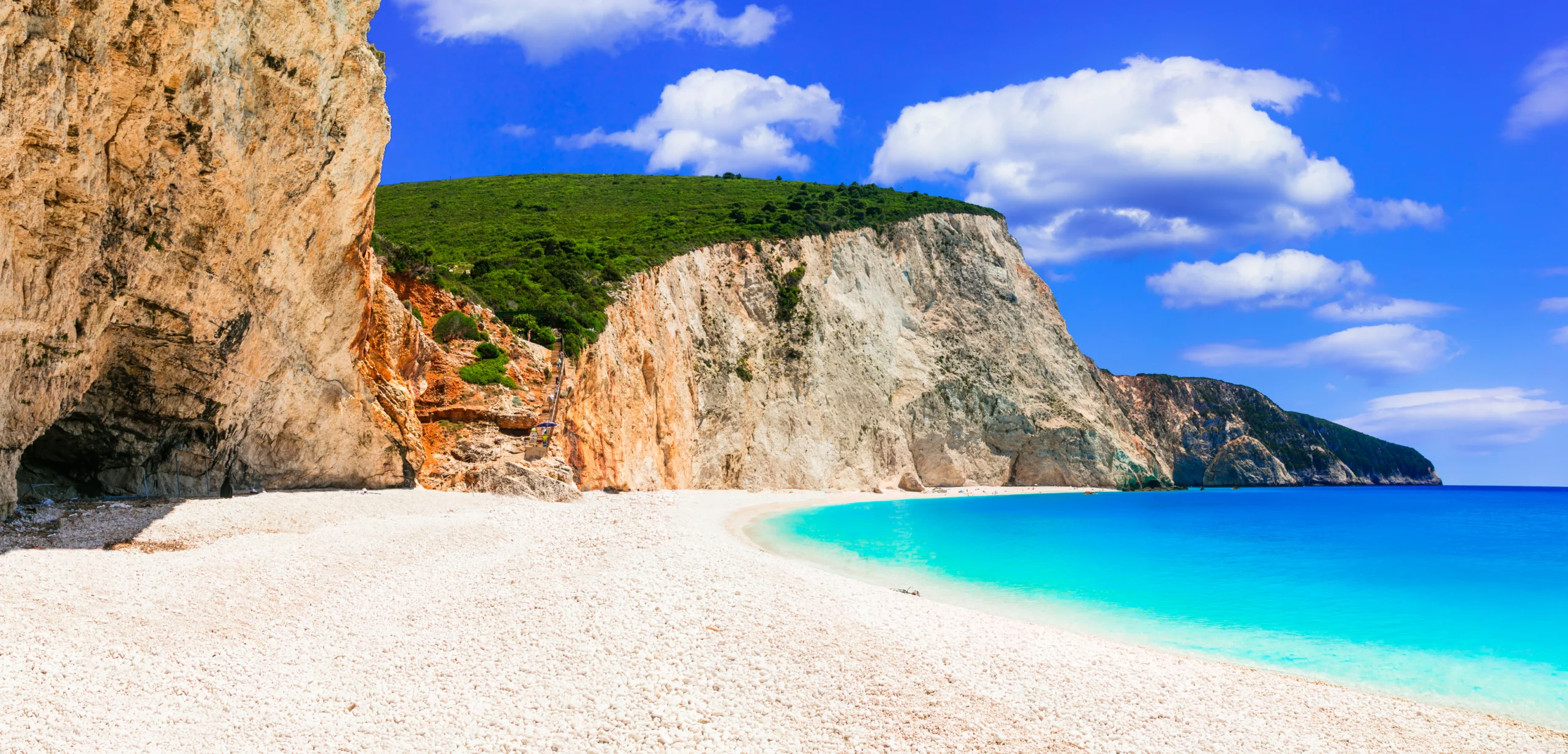
Photo by © Freesurf69 | Dreamstime.com
Connected to the Greek mainland by a narrow causeway but surrounded entirely by sea, Lefkada is a practical charter base. The west coast conceals a sequence of beaches—Porto Katsiki, Egremni, Kathisma—that appear regularly in lists of Europe’s finest and justify the description. The sailing here is more sheltered than the open Aegean, with the islands of Meganisi, Skorpios, and Kastos lying close enough to make a day’s island-hopping feel leisurely. The main town, Lefkada Town, is built to withstand earthquakes in a style unique to the Ionian; The upper stories of buildings are clad in painted sheet metal, giving the streets an unexpected industrial warmth.
What to do ashore: Anchor off Meganisi (Lefkada’s quietest near-neighbor) and take the dinghy into the small harbor at Spartochori.
Ithaca
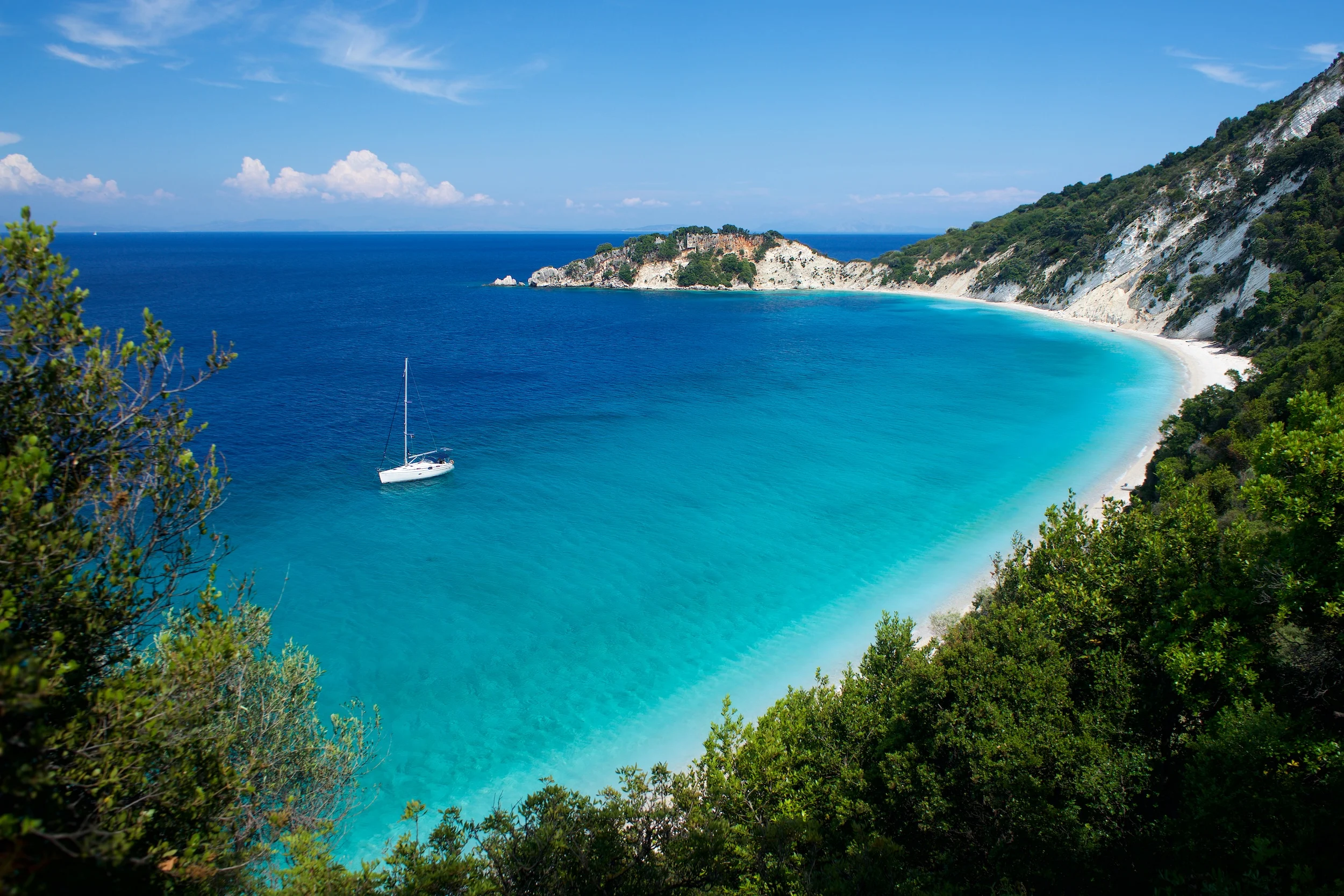
Photo by © Jnkoste | Dreamstime.com
Odysseus’s home island is small enough to circumnavigate in a day but significant enough to merit several. The landscape is steep, wooded, and vertiginous—nothing like the flat neighboring Kefalonia—and the main harbor at Vathy, one of the deepest natural harbors in the Mediterranean, has the particular quality of somewhere that has been receiving boats for a very long time. The island wears its mythology lightly; there are no theme-park tributes to the Odyssey, just a quiet town, a good local wine, and the sense that the geography itself is the attraction. Sail around to the bay at Kioni in the north ( three windmills on a hillside above a perfect horseshoe harbor) and you will find it difficult to leave on schedule.
What to do ashore: The cave of the Nymphs, a short walk above Vathy, is where Odysseus supposedly hid his treasure on returning home. The walk is worthwhile regardless, and the view over the harbor from the hillside path is among the better ones in the Ionian.
The Dodecanese
Symi
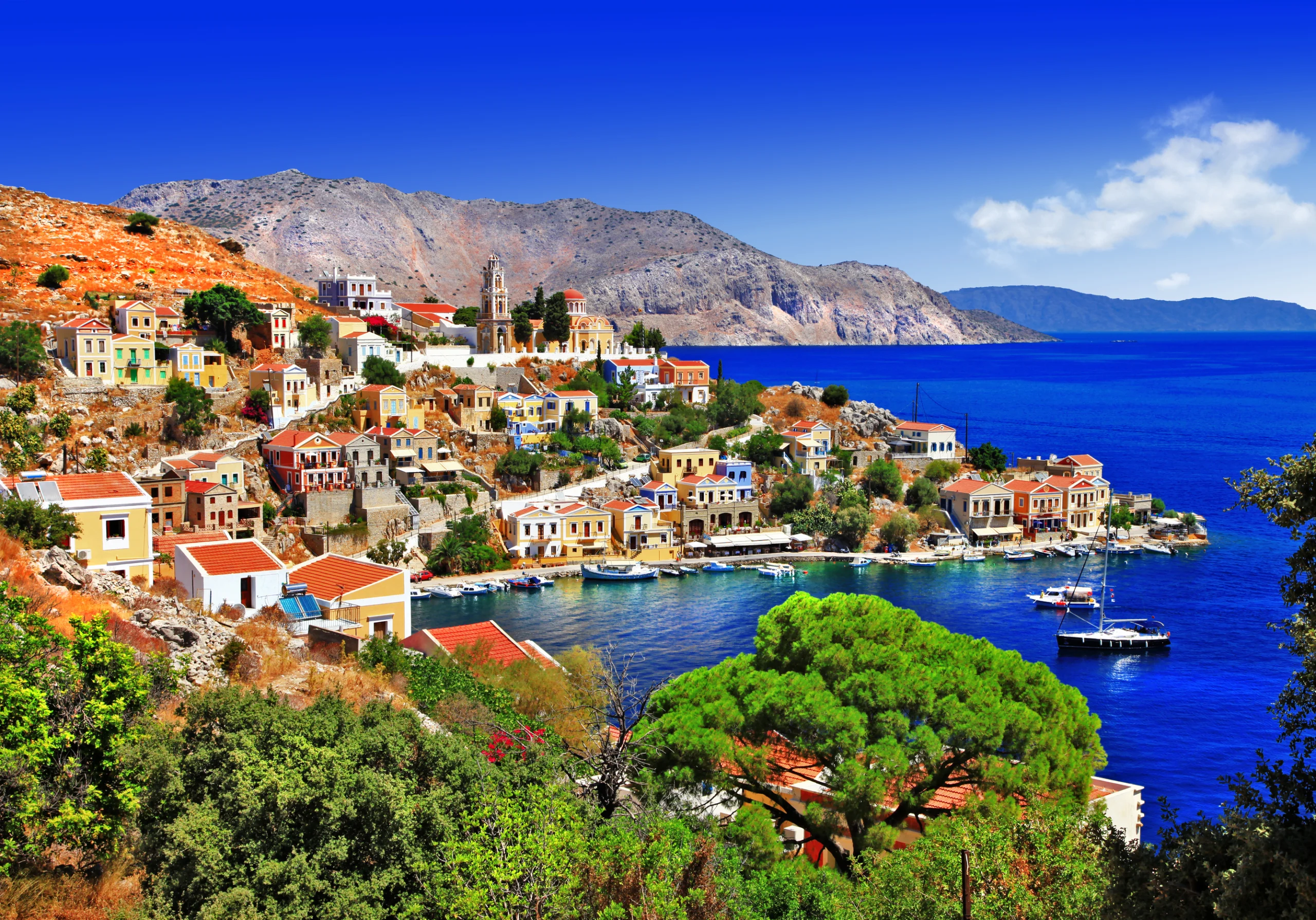
Photo by © Freesurf69 | Dreamstime.com
Every sailor who rounds the headland into Symi’s main harbor for the first time has the same reaction. The neoclassical mansions rise in tiers above the water—ochre, terracotta, cream —built during the island’s nineteenth-century prosperity as a sponge-diving capital and maintained in near-perfect condition. The harbor itself, Gialos, is lined with restaurants and chandleries in equal measure, which is to say it remains a working place as well as a beautiful one. The upper town, Chorio, is reached by hundreds of steps (the Kali Strata) and contains a castle, a folklore museum, and the kind of views that make the climb immediately forgivable.
What to do ashore: Take the water taxi to the monastery of Archangel Michael at Panormitis, in the island’s south. One of the most significant Orthodox monasteries in the Dodecanese, it sits at the head of a deep, sheltered bay.
Patmos
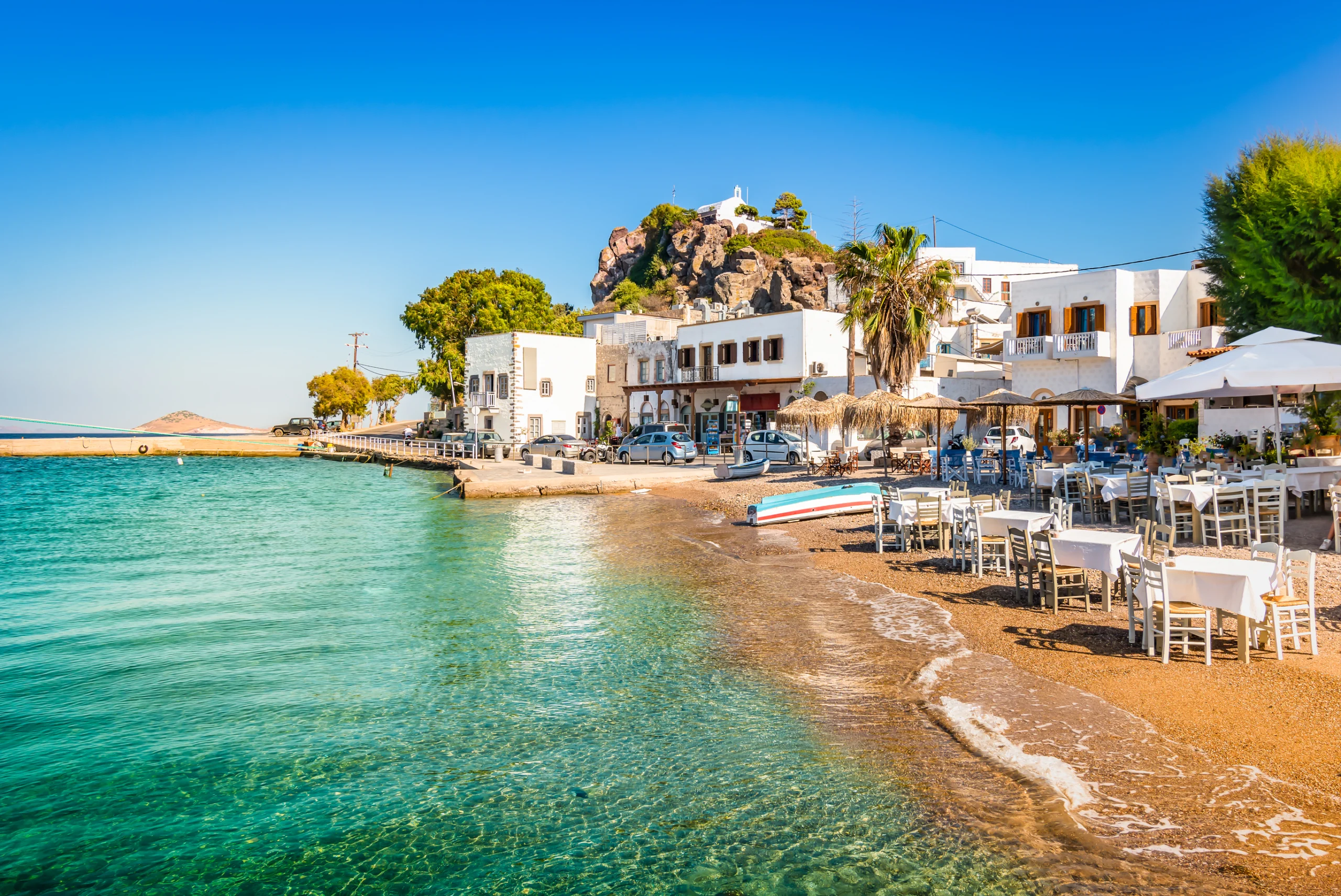
Photo by © Nancy Pauwels | Dreamstime.com
The northernmost of the Dodecanese and the most spiritually weighted, Patmos is where St John wrote the Book of Revelation, and the island has never entirely shaken the gravity of that association. The monastery of St John the Theologian crowns the hill above Chora like a fortress, visible from the sea long before you reach the harbor at Skala. Chora itself is a warren of medieval lanes, captain’s mansions, and vaulted passageways and is one of the finest preserved traditional settlements in the Aegean, and a UNESCO World Heritage Site. The island draws an international crowd of writers, collectors, and people who have been before and keep returning.
What to do ashore: The Cave of the Apocalypse, halfway between Skala and Chora, is where John is said to have received his visions. It is incorporated into a monastery and can be visited in the morning. The walk continues up to Chora and rewards with a lunch of mezedes at one of the small tavernas in the main square, where the view south toward the Aegean is, on a clear day, endless.
Conclusion
One week in the Greek islands will not be enough. It will, however, be enough to understand why people keep coming back and chartering longer each time, ranging further, finding the cove that is not on the chart and the taverna that is not in any guide. Greece accommodates this kind of exploration. The sea is patient, the anchorages are many, and the light, as anyone who has watched it fall across a whitewashed wall in the evening will tell you, is rather magical.
Book the week. Plan the return.
More articles
Ready to set sail?
Discover the perfect yacht charter for you — effortlessly with Yacht.com.


