Why Norway’s Lofoten Islands are the Next Yachting Hotspot
Dramatic, remote, and stunningly beautiful with soaring peaks that rise from fjords and endless summer daylight, the Lofoten Islands are emerging as one of the world's most exciting yachting destinations.
Despite the high latitude, situated above the Arctic Circle, temperatures in the Lofoten Islands are relatively mild, often in the 60s Fahrenheit during the summer. From roughly late May through early August, you’ll also have continuous daylight for sailing, a period known as the Midnight Sun. The scenery is a highlight, with mountains famously described as the “Alps with their feet in the sea” and white sandy beaches lapped by brilliant turquoise water. The historic red fishing cabins called rorbuer add even more vibrant splashes of color.
Beyond sailing, in this outdoor adventurer’s paradise, you can hike to mountain tops for stunning aerial views and kayak sheltered waters while watching for everything from puffins and sea eagles to orcas. Plus, there’s a rich Viking history to explore and an abundance of fresh seafood.
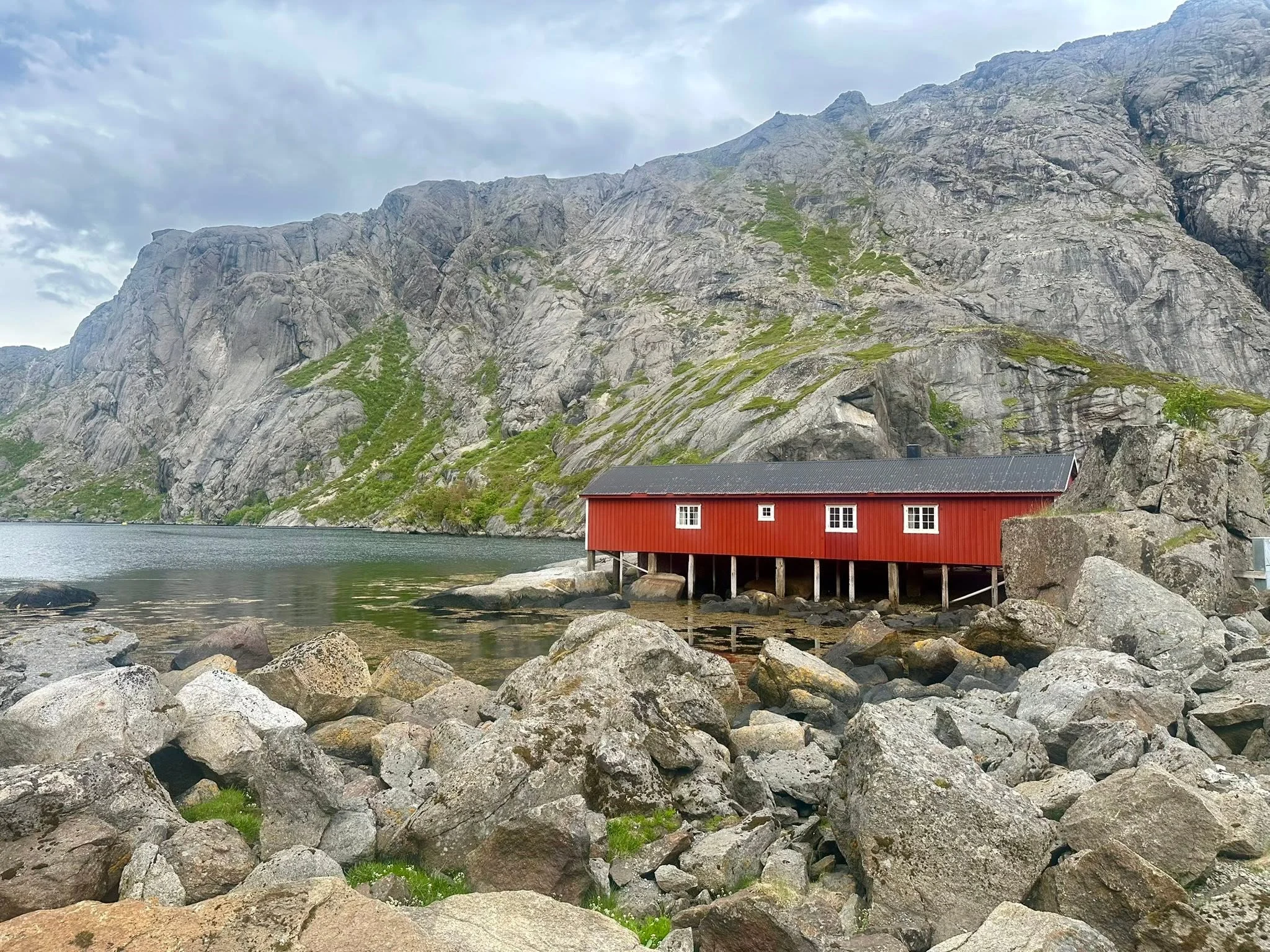
Photo courtesy of KC Dermody
The Sailing Conditions
Summer in the Lofoten Islands provides 24 hours of daylight for flexible navigation, while inner fjord systems and the eastern side of the archipelago offer outstanding, protected anchorages for safe cover when weather or winds blow up on the open sea. Sailing conditions are dictated by strong tidal currents and fast-changing weather that can include shifts in wind direction and unpredictable gusts that cascade off the steep mountain peaks. The region is famous for its powerful tidal currents, including one of the world’s strongest whirlpools: the Moskstraumen. That makes it essential to study tide tables before entering any narrow sounds or fjords.
Thanks to the Gulf Stream, air temperatures are surprisingly pleasant in the summer. Of course, they’re obviously cool compared to tropical regions, typically ranging from the upper 50s to the low 60s. While the coastal waters are free of ice year-round, the prime sailing season is June through August, with ideal conditions for island-hopping, hiking, kayaking, and other outdoor activities that can be enjoyed late into the night with the endless daylight.
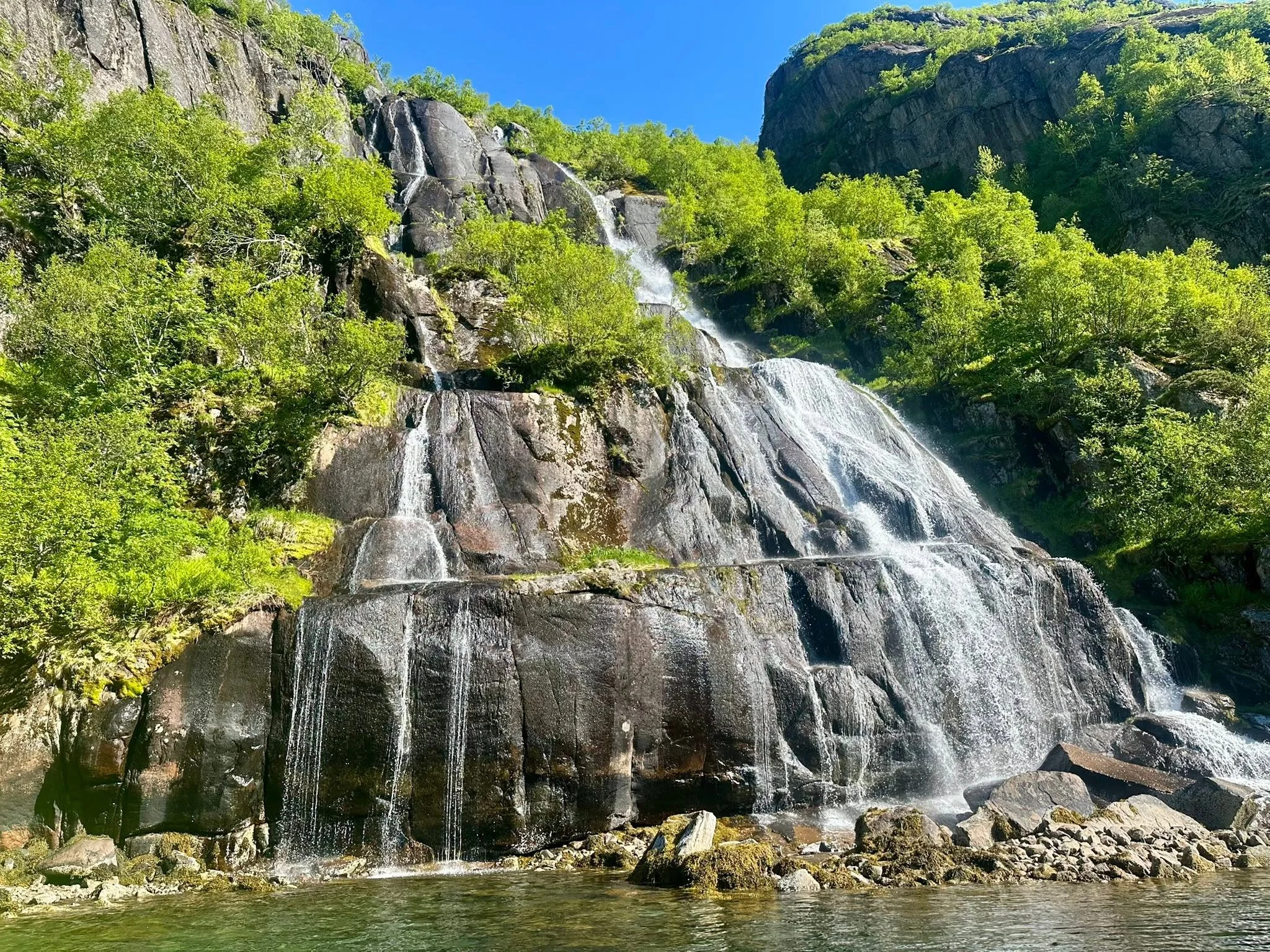
Photo courtesy of KC Dermody
The World’s Most Breathtaking Natural Beauty
Having visited nearly 60 countries, including the Lofoten Islands and other destinations in Norway, in this writer’s opinion, you won’t find any place more breathtaking. Awe-inspiring sights are around every corner, from Caribbean-like white sandy beaches and cascading waterfalls to charming fishing villages with historic red cabins built on wooden stilts sitting at the foot of mountains that rise for nearly three-quarters of a mile. Climbing to one of the mountain peaks for a panoramic view is one of the most popular things to do here.
The iconic Reinebringen hike, with nearly 2,000 stone steps built by Sherpas, leads to a view overlooking Reine and the surrounding fjords. Svolværgeita, known as “The Goat,” is another one of the most famous. Located just outside Svolvær, it features twin horn-like summits. Kayaking or taking a boat tour brings a unique and spectacular perspective of dramatic cliffs and the islands’ many birds, including Atlantic puffins and sea eagles.
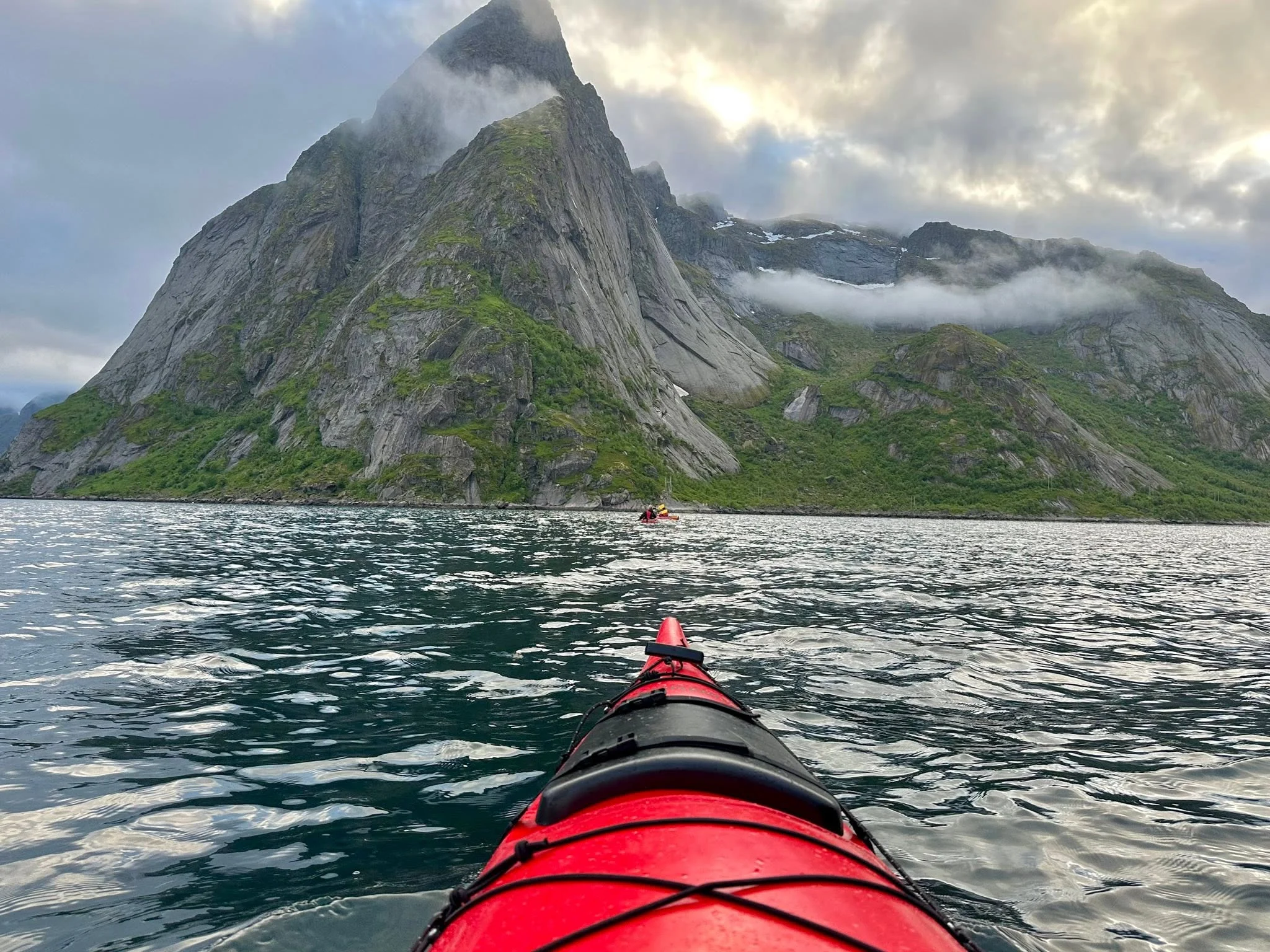
Photo courtesy of KC Dermody
Viking History
The Lofoten Islands have a rich Viking history that’s intertwined with the surrounding waters. As
The region provided a massive supply of cod and cod-liver oil, powerful chieftains and seafaring warriors built wealthy settlements here. Kabelvåg, also known as Vågan, is considered to be the oldest settlement within the Arctic Circle. Established by Vikings and early Norse traders, it served as one of the most important trading posts and fishing centers during the Viking Age.
The crown jewel for learning more about the archipelago’s Viking past is the Lofotr Viking Museum in Borg on Vestvågøy. This is where archaeologists discovered the foundations of a vast longhouse. At 272 feet in length, it’s the largest Viking era structure ever found in Scandinavia. It’s been fully reconstructed to its original grandeur and comes complete with living history guides. It’s also possible to try your hand at axe throwing, row a replica Gokstad Viking ship in the lake, and try traditional Viking fare with mead.
Uncover more history by visiting Loften Cathedral, which ties directly into the islands’ medieval past that evolved immediately after the Vikings. The Lofoten Museum sits in an idyllic spot at water’s edge on the site of the medieval town of Vágar. It includes an impressive 1815 manor house, authentic fishermen’s cabins, boathouses with Nordland boats, and exhibits focused on traditional crafts, fisheries, coastal lighthouses, and ports.
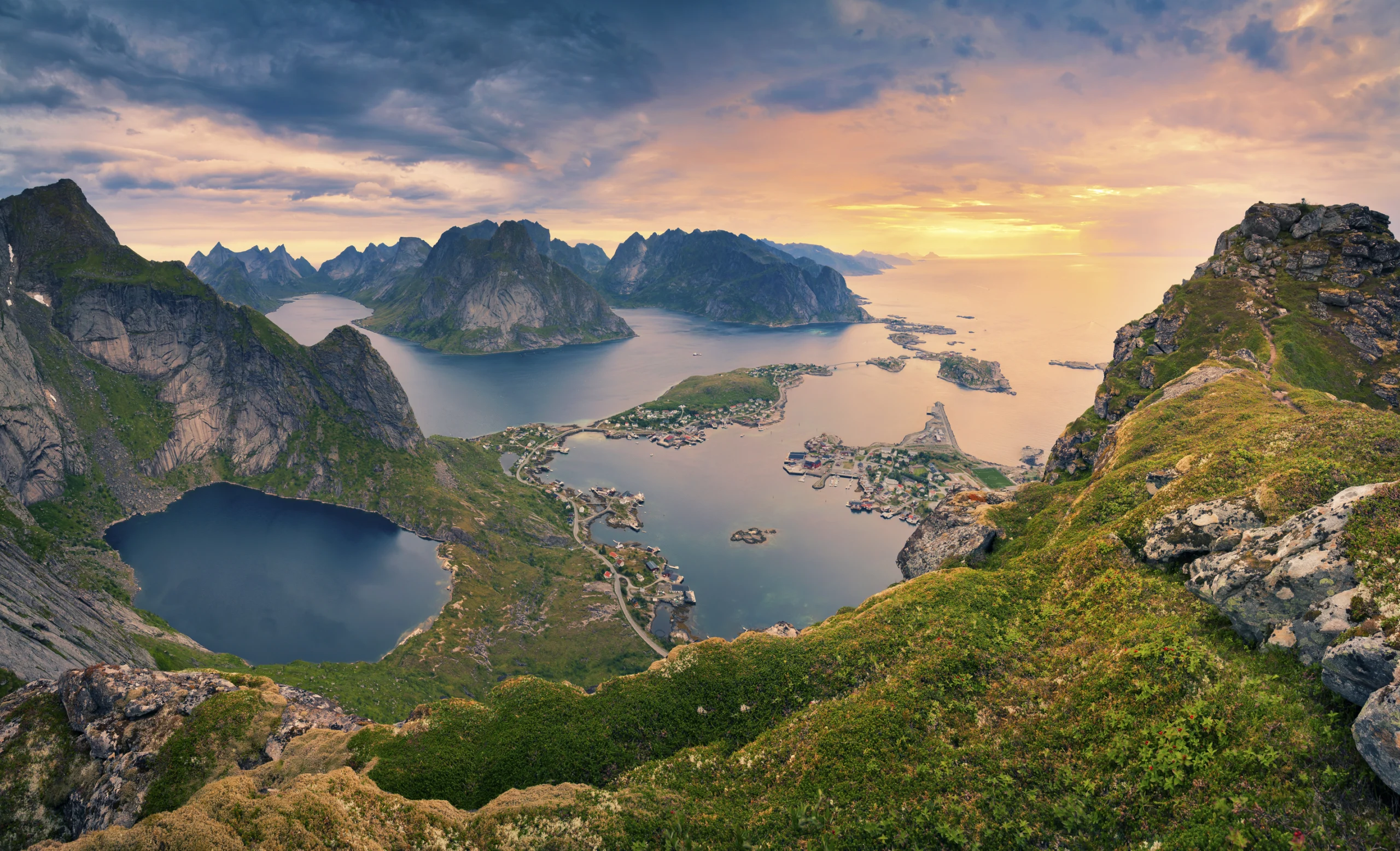
Photo by © Rudi1976 | Dreamstime.com
Lofoten Islands: A 7-Day Itinerary
There are many possible routes, but one of the most popular starts on the mainland in Bodø. Direct flights to this “mini metropolis up north,” set on a peninsula that juts out into the Norwegian Sea just north of the Arctic Circle, are available from the capital city of Oslo.
Day 1: Bodø to Svolvær
Embark on your yacht in Bodø and look forward to a scenic sailing across the Vestfjorden toward the main archipelago. In the afternoon, you’ll enter the magnificent Trollfjord with an entrance so narrow that the mountain walls will be towering directly over the vessel. Anchor in the Lofoten’s largest town of Svolvær, with the iconic Svolværgeita (The Goat) rock formation that looms above, enticing rock climbers to do the famous “Svolvær Goat Jump” between its two horn-like peaks.
There are many excellent local seafood restaurants when it’s time to dine, but first, you might want to grab a drink served in an ice glass at Magic Ice Lofoten. It’s a sub-zero experience that includes a warm welcome, complete with gloves and a poncho to wear inside the world’s first permanent ice gallery.
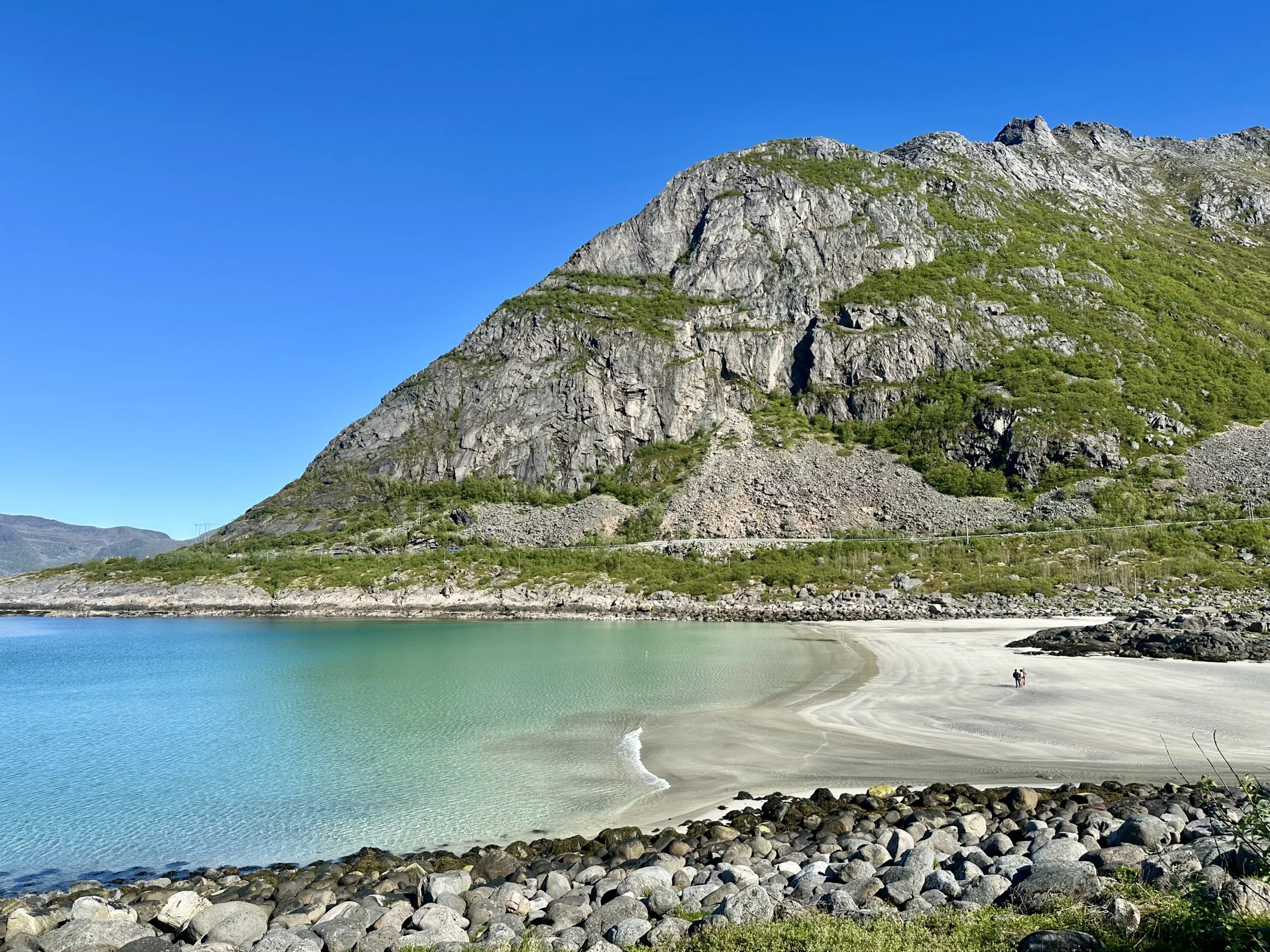
Photo courtesy of KC Dermody
Day 2: Henningsvær
Next, cruise south to the fishing village of Henningsvær. Dating to 1556, it was built across several small islands with its economy based on fisheries and the cod industry. Anchor in the harbor to explore the village with local art galleries, boutiques, seafood eateries, and the iconic Henningsvær Stadion, a football stadium that’s been called the world’s most beautiful, constructed atop a rocky islet.
Visit Gallery Lofoten to check out the largest collection of North Norwegian paintings from the Golden Age of North Norwegian painting (roughly spanning from the 1880s to the early 1900s). The KaviarFactory is a renowned museum showcasing contemporary art by Norwegian and international artists, from Bjarne Melgaard to Yoko Ono. Set in a former caviar factory, it’s the top contemporary art destination north of Bergen. There is also a gift shop with luxury woolen items and a rare collection of art books. Just five miles from Henningsvær, Rorvik Beach is a postcard-perfect stretch of white sand with clear aquamarine water popular for refreshing dips.
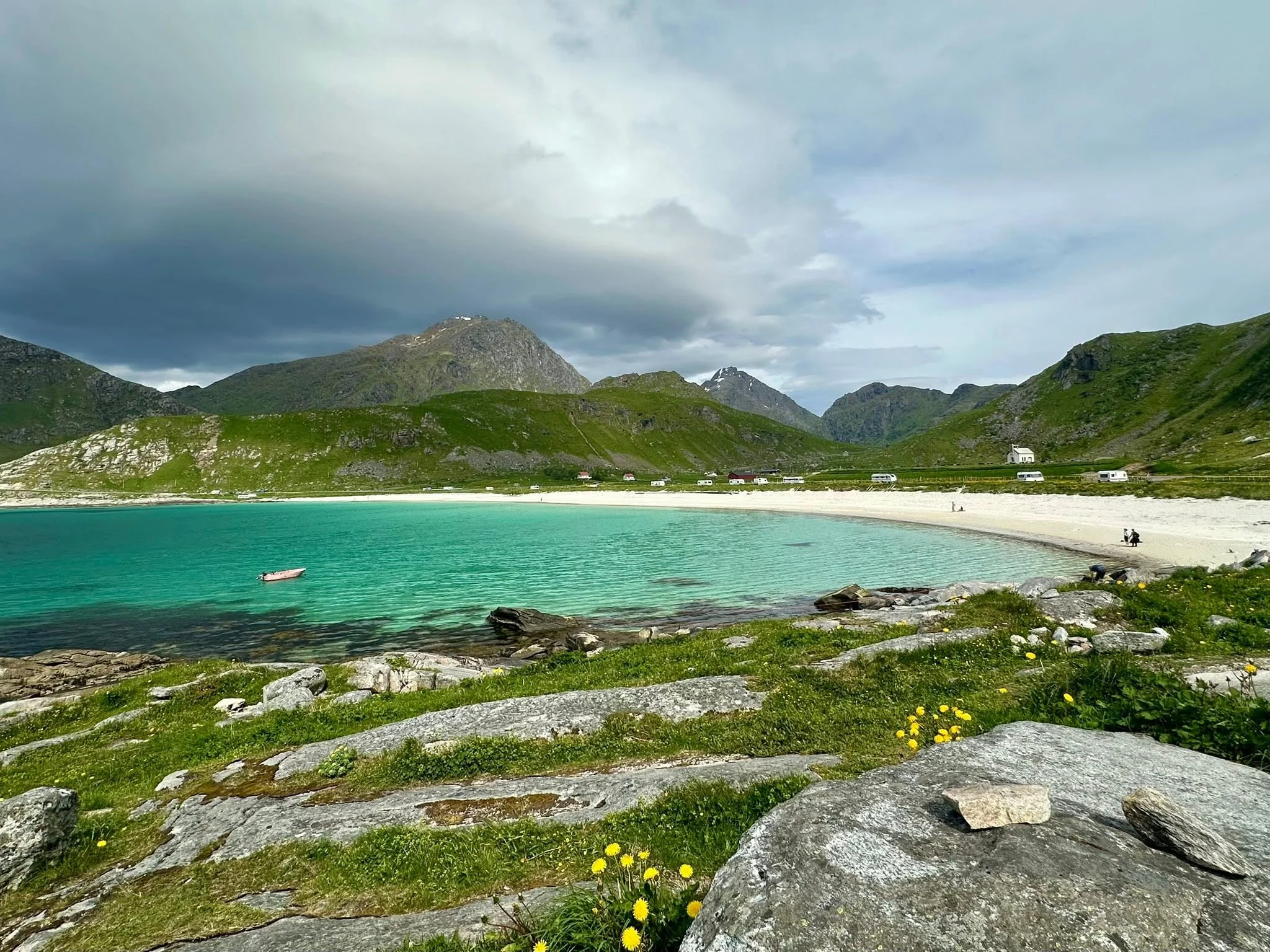
Photo courtesy of KC Dermody
Day 3: Vestvågøy
Today, you might sail around the southern coast of Vestvågøy and visit some of Lofoten’s most beautiful beaches. Anchor near the chalk-white sands of Haukland Beach and Uttakleiv Beach, using a tender or a kayak to explore the brilliant turquoise waters and rugged coastline. If you’re up for a hike, follow the trail up Mannen Peak. It’s a steep but relatively short 1.25-mile trek, with your reward a 360-degree view of both Haukland and Uttakleiv beaches.
The best place to spend the night nearby is Ballstad. It can be accessed via a scenic sail around the cape and features a fully-equipped sheltered marina known for its gourmet dining.
Day 4: Nusfjord & Flakstadøya
In the morning, cruise over to Nusfjord on the island of Flakstadøya. A UNESCO-listed site, it’s like an open-air museum. One of the most well-preserved and oldest fishing villages in Norway, you’ll have to pay to enter, but the roughly $10 fee is well worth the cost. You’ll be stepping back in time to an era where cod was laid out on the cliffs and hung on drying racks throughout the area. Many of the old work buildings, including the smokehouse, smithy, boat houses, and cod liver oil factory, have been preserved and now form part of a historic tour. It’s also possible to kayak in the fjord, tucked between steep mountains rising straight from the sea. Or, hike the picturesque coastal and mountain trails for panoramic views of Lofoten.
Also on Flakstadøya, you can visit a unique attraction, Glasshytta Vikten. It’s Northern Norway’s oldest glassblowing studio, located in the village of Vikten. It has a retail shop and a studio space, where, if you’re lucky, you can watch the artisan at work.
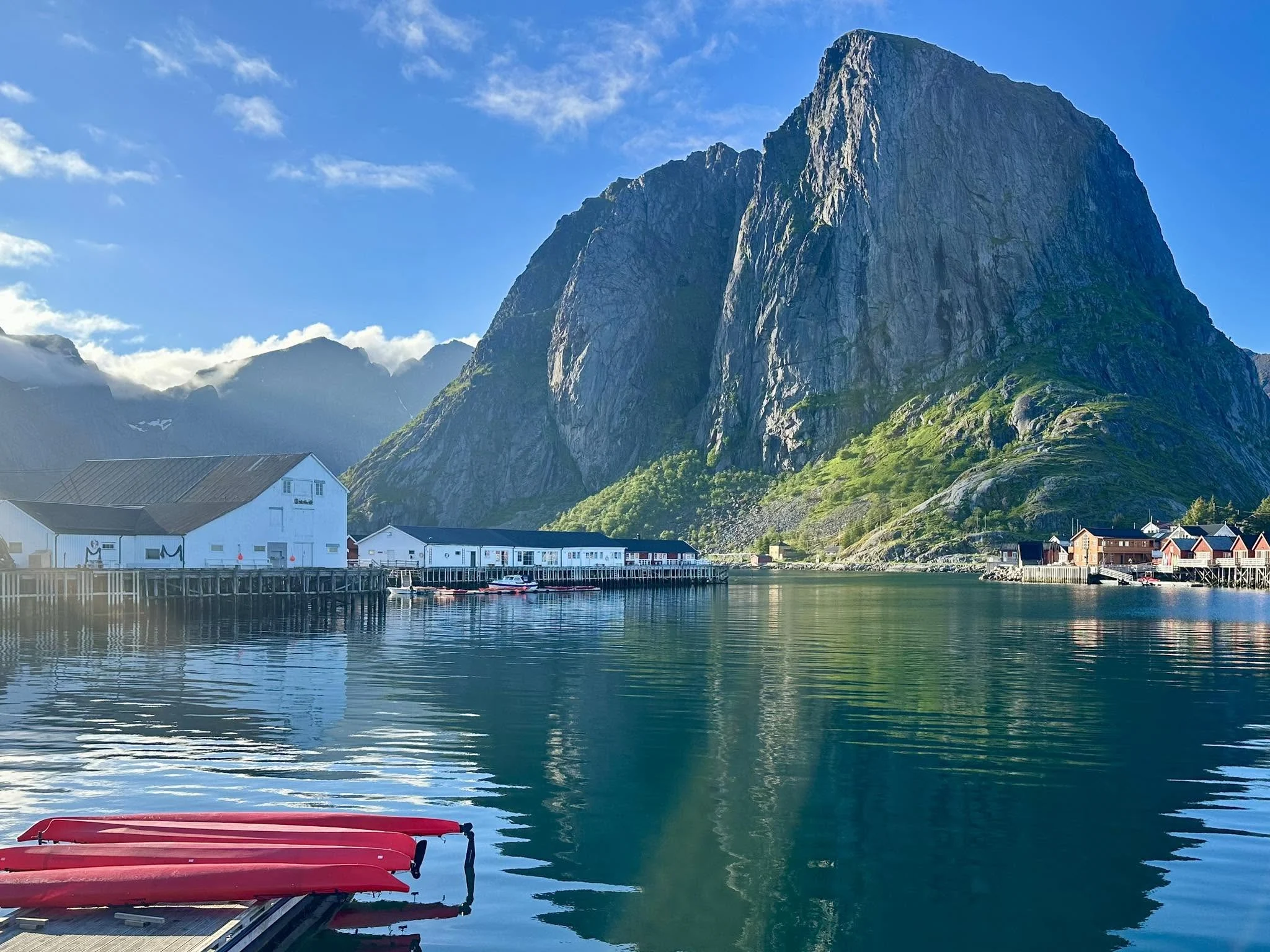
Photo courtesy of KC Dermody
Day 5: Reine & Hamnøy
Sail toward the southwestern tip of the islands by following the famous “Lofoten Wall,” a 62-mile-long unbroken chain of jagged, snow-capped mountains that rise abruptly from the sea to heights of up to 3281 feet. Anchor in the harbor of one of Lofoten’s prettiest towns, Reine, overlooked by Reinebringen Mountain, while filled with rorbuer, the region’s traditional red fishermen’s cabins. One of the most popular things to do here is hike the 1,566 stone steps to the summit of Reinebringen for a breathtaking panoramic view of the fjord and the village.
The nearby Hamnøy Bridge is one of the best vantage points for capturing a postcard-perfect view of rorbuer against the towering, craggy mountain peaks. Hamnøy is not only one of Lofoten’s most photogenic villages. It’s also a departure point for guided sea-kayaking excursions, providing yet another spectacular perspective of the fjord, waterfalls, and mountains.
Day 6: Værøy Island
It’s worth sailing into the open sea to visit the remote island of Værøy. A hike to Håen’s nearly 1,500-foot-high peak showcases sweeping panoramas of the turquoise water, the white sandy beaches, and dramatic cliffs. A just over 1.5-mile-long trail, it’s easy to navigate, with gentle switchbacks. Be sure to keep watch for the vast population of white-tailed sea eagles in the area while you’re here.
Head to Sandan on the western side of the island with beautiful natural anchorages or the more protected Værøy Båtforening marina in Sørland harbor, with the outer half of the first pontoon designated for visiting vessels.
Day 7: Return to Bodø
This morning, make your final passage across the Vestfjorden, returning to Bodø for disembarkation.
More articles
Ready to set sail?
Discover the perfect yacht charter for you — effortlessly with Yacht.com.


