The US Virgin Islands by Yacht: A Complete Island-by-Island Guide
Trade winds and turquoise water — here's everything you need to plan a yacht charter in the US Virgin Islands, island by island.

Warm trade winds, water in every shade of blue and green you can imagine, short hops between stunning islands, and the very practical bonus of being on American soil. The US Virgin Islands deliver the Caribbean at its most accessible.
Whether you’re arriving on a private yacht, stepping onto a crewed charter in Charlotte Amalie, or taking the helm of a bareboat for the very first time, these waters live up to every bit of their reputation.
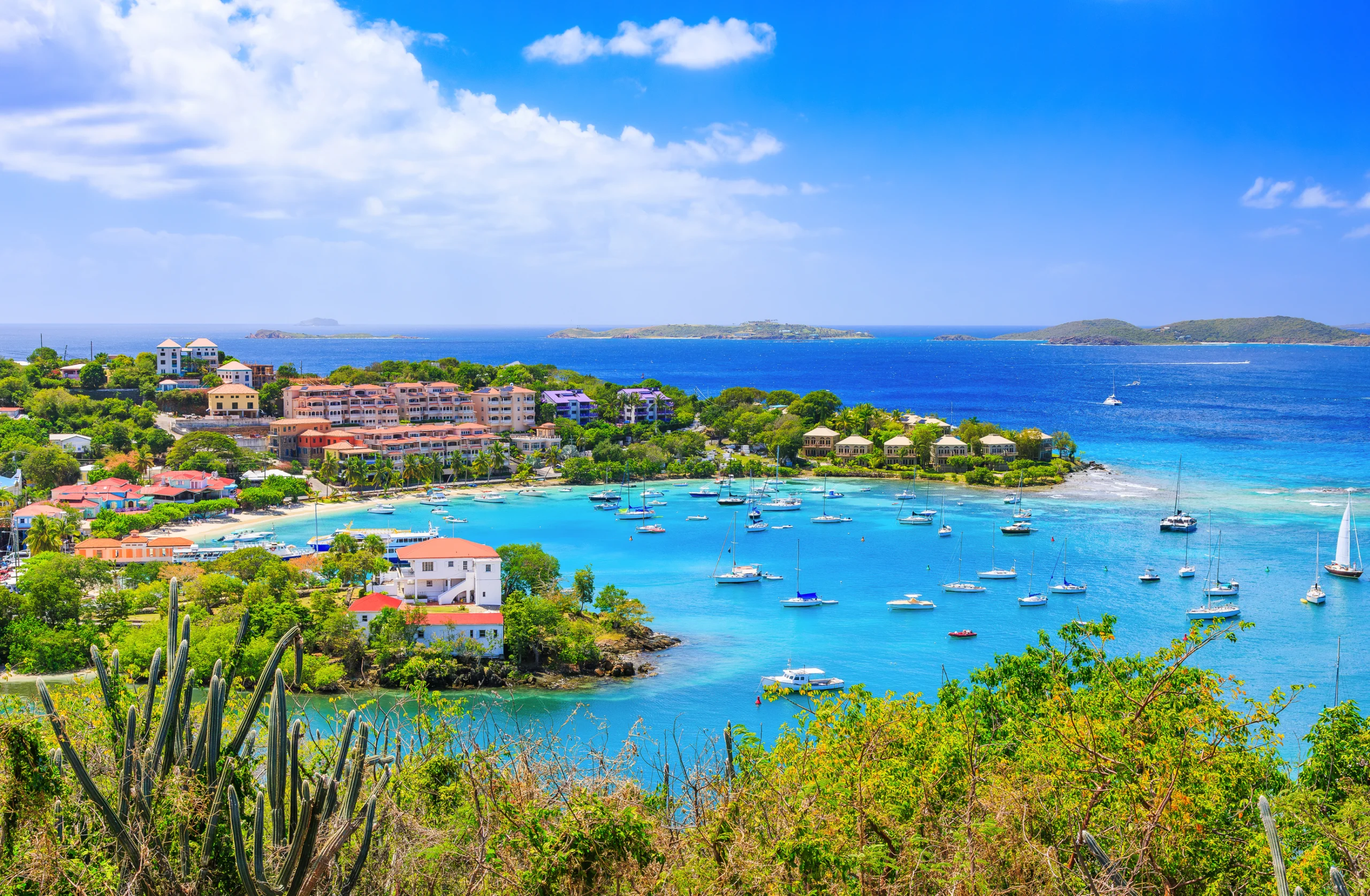
Photo by © Sorin Colac | Dreamstime.com
Why the USVI?
American citizens don’t need a passport, the dollar is the local currency, and the infrastructure—from the deep-water docks of St. Thomas to the well-maintained mooring fields off St. John—is a cut above what you’ll find at many Caribbean destinations. St. Thomas’s Cyril E. King Airport has direct flights from most major US cities, which means you can leave a northeastern winter behind in the morning and be floating in warm turquoise water by evening.
The sailing itself is equally compelling. Trade winds blow steadily out of the east-northeast at 10 to 20 knots through peak season. Passages between the main islands are measured in nautical miles, not days. And the variety here, with lively harbors on St. Thomas, national park solitude along St. John’s north shore, dramatic deep-water walls around St. Croix makes no two days feel the same.
The Three Main Islands: What to Expect at Each Anchorage
St. Thomas
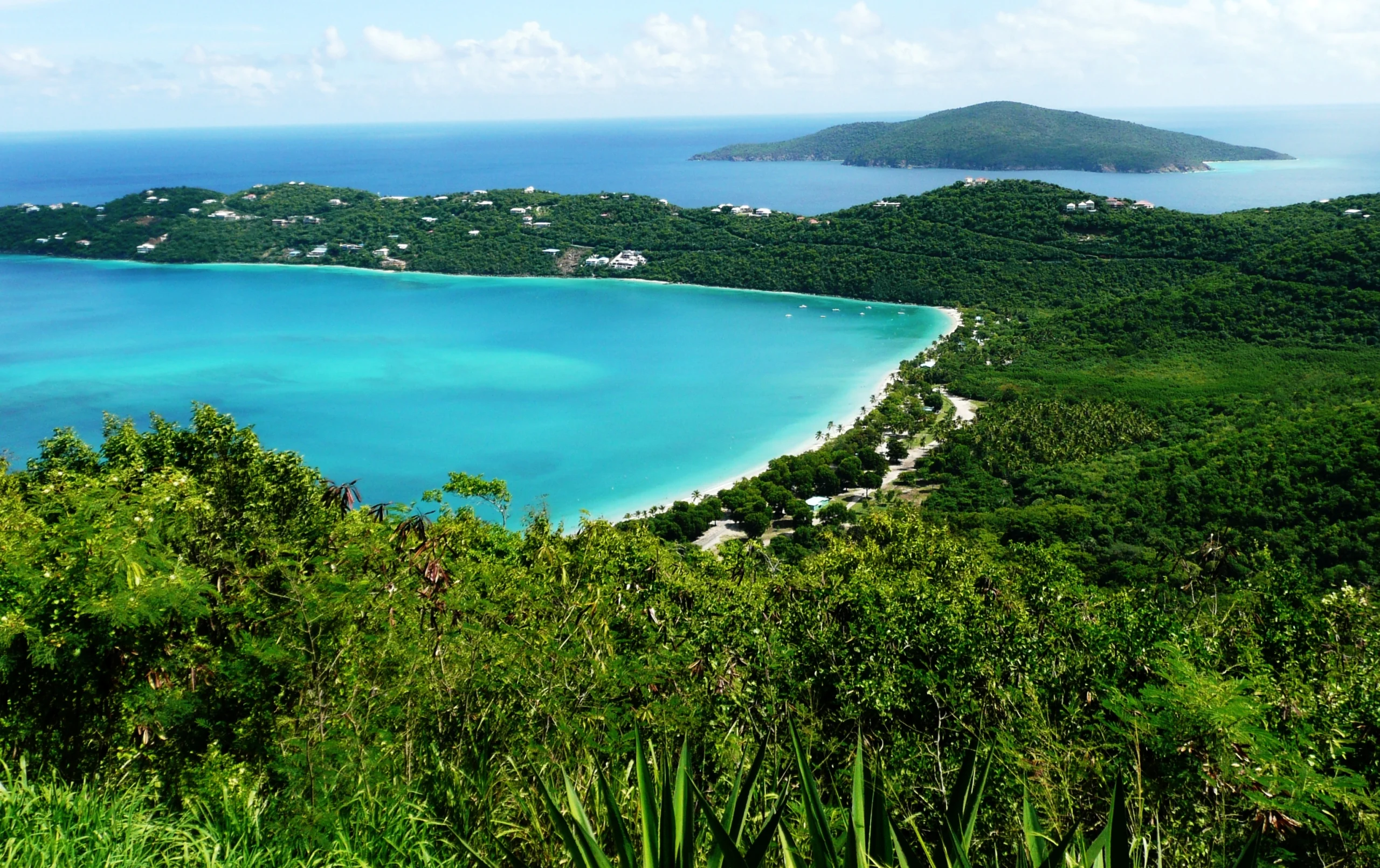
Photo by © Nuno Leitão | Dreamstime.com
Most USVI charters start here. Charlotte Amalie, the capital, sits on one of the finest natural deep-water harbors in the Caribbean—sailors have known about it since the Danish colonial era, and the infrastructure has kept pace. Two world-class marina facilities serve every size of vessel.
Yacht Haven Grande
Yacht Haven Grande, on the eastern side of Charlotte Amalie Harbor, is where the superyachts go. It can handle vessels up to 656 feet, the amenities are impeccable, and you’re within easy walking distance of Havensight’s duty-free shopping and the waterfront energy of Charlotte Amalie. If you’re arriving from the US East Coast on a larger boat, this is your natural first stop.
American Yacht Harbor
American Yacht Harbor at Red Hook, on St. Thomas’s eastern tip, is the working heart of the charter scene. With 128 slips for yachts up to 164 feet, easy provisioning, a cluster of good waterfront restaurants, and quick ferry connections to St. John, Red Hook is where the practical business of getting underway actually happens. Most bareboat operators base their fleets here.
Magens Bay & Christmas Cove
Beyond the marinas, St. Thomas rewards some unhurried exploration. Magens Bay on the north shore is one of the most photographed beaches in the Caribbean (a long, calm arc of water sheltered by green hills). And Christmas Cove, off the southern tip of St. Thomas near Great St. James island, might be the finest anchorage in the entire territory. Reliable holding, excellent reef snorkeling, and (this is important) a pizza boat that shows up most afternoons to sell cold drinks and hot pies to anchored boats.
St. John
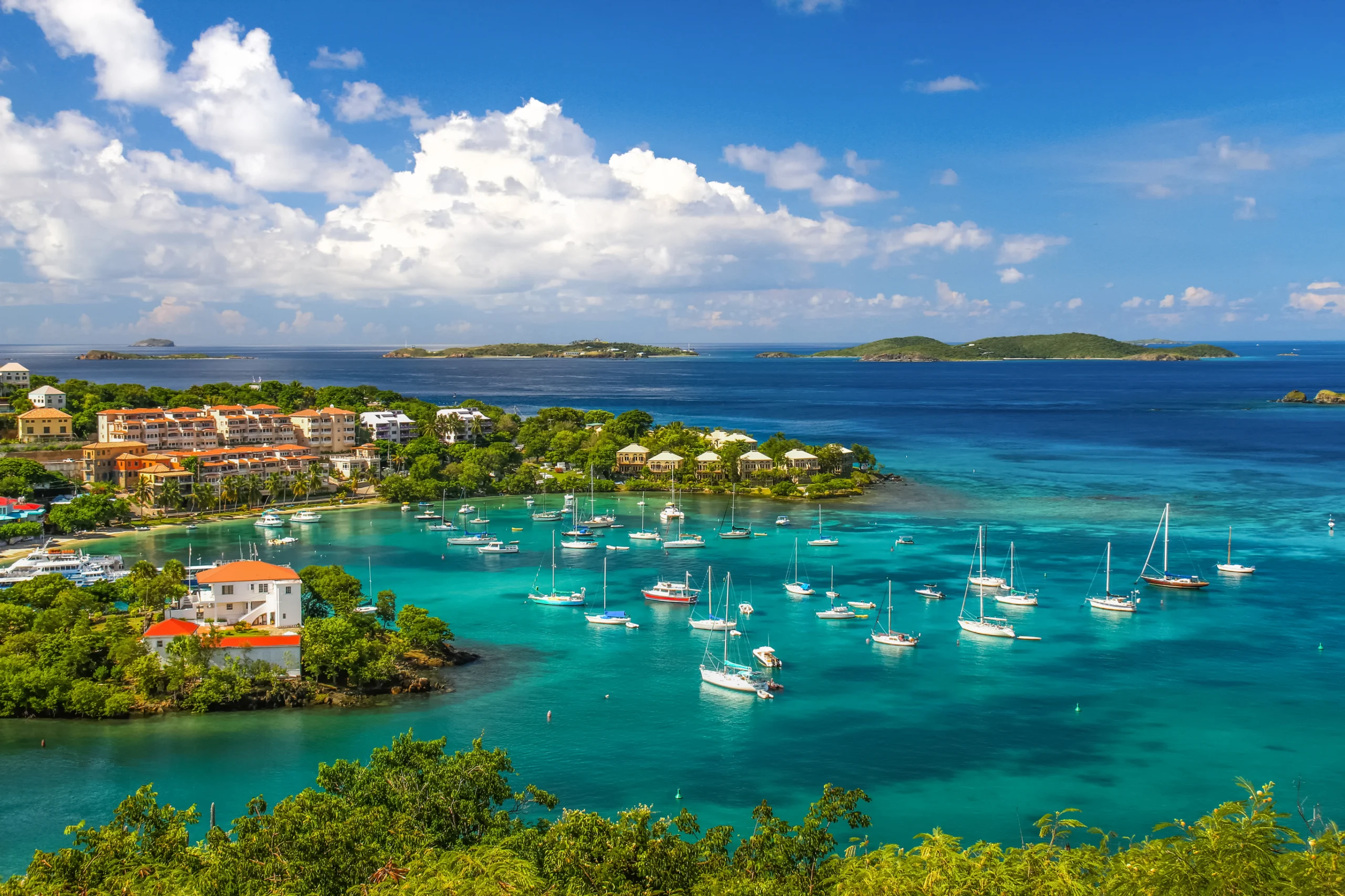
Photo by © Lawrence Weslowski Jr | Dreamstime.com
Nine miles east of St. Thomas, St. John is surprisingly different. More than two-thirds of the island and its surrounding waters fall within the Virgin Islands National Park, which has kept development at bay. The result is some of the most unspoiled sailing in the American Caribbean.
Cruz Bay
Cruz Bay is St. John’s only town and port of entry. There are good restaurants, some provisioning options, and a wonderfully welcoming energy to the whole place. The anchorage north of Cruz Bay has mooring options for smaller yachts with easy dinghy access to shore. Grab a mooring ball rather than anchoring if you can, since holding can be inconsistent in the shallower areas.
Trunk Bay
Work your way around the north shore and you hit the national park bays. Trunk Bay is famous for its 650-foot marked underwater snorkel trail and its powdered-sugar beach, though by midday the day-tripper crowds arrive in force. Get there early, before the ferry traffic builds, and you’ll have one of the most beautiful spots in the Caribbean largely to yourself.
Maho Bay and Francis Bay
Maho Bay and Francis Bay, a bit further along, are quieter and less visited. Francis Bay in particular is a beautiful anchorage with good snorkeling, a small beach, easy access to hiking trails, and exceptional birding at the salt pond (for anyone who thought to bring binoculars).
Salt Pond Bay and Ram Head
St. John’s south shore is wilder and sees fewer visitors. Salt Pond Bay near the southeastern tip has a National Park Service mooring field, but only five balls, so arriving early is a necessity. The hike to Ram Head from Salt Pond Bay is one of the best short walks in the entire USVI, with sweeping views over the Anegada Passage and, on a clear day, the distant outline of St. Croix on the horizon.
Lime Out: The Floating Taco Bar
And don’t miss Lime Out at Coral Harbor on the southwest shore—a floating taco bar that’s become something of a local institution. You’re served in the water or perched just above it on the bar’s edge.
St. Croix
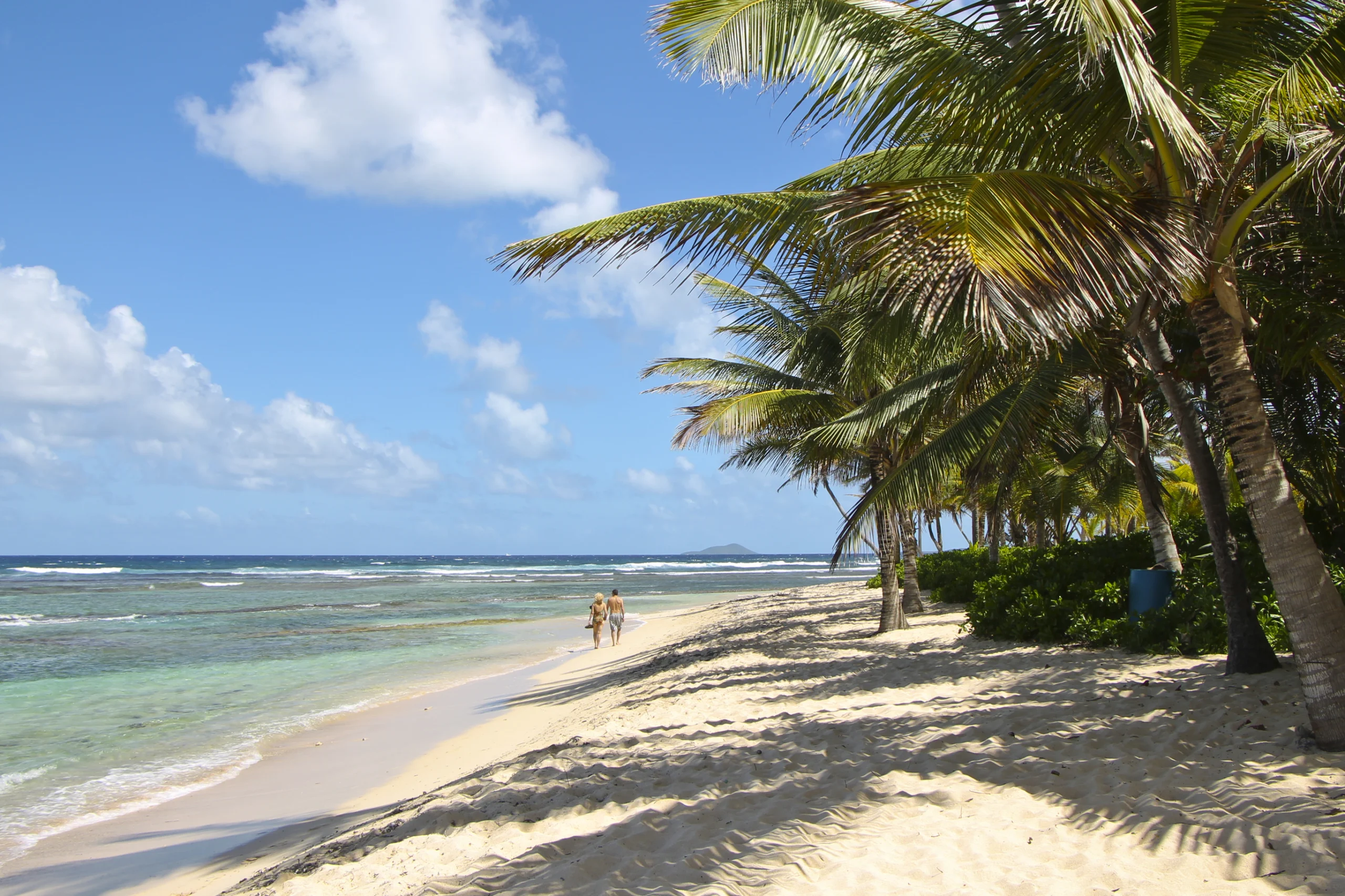
Photo by Photo by © Linda Morland | Dreamstime.com
Forty miles south of St. Thomas, St. Croix sits outside the main St. Thomas–St. John charter circuit. It’s the largest of the three main USVI islands and quite different in character—flatter, greener, steeped in Danish colonial history, and noticeably less crowded than its northern neighbors.
Christiansted
Christiansted on the north shore is where visiting yachts come in. The harbor is framed by a beautifully preserved Danish colonial waterfront with pastel facades, covered arcades, the kind of ambiance that feels closer to a small European harbor town than anything else in the USVI. The anchorage has good holding, a chandlery and provisioning options nearby, and St. Croix Marina offers full boatyard facilities for anyone who needs repairs after a longer passage.
Salt River Canyon & Frederiksted
The diving here justifies the trip on its own. The Salt River Canyon, near one of the most significant pre-Columbian archaeological sites in the Caribbean, offers wall diving that plunges hundreds of feet into the Puerto Rico Trench. The west end of the island around Frederiksted is equally spectacular underwater, with a dramatic pier dive where the pilings host an almost absurd density of marine life. If you dive, don’t skip St. Croix.
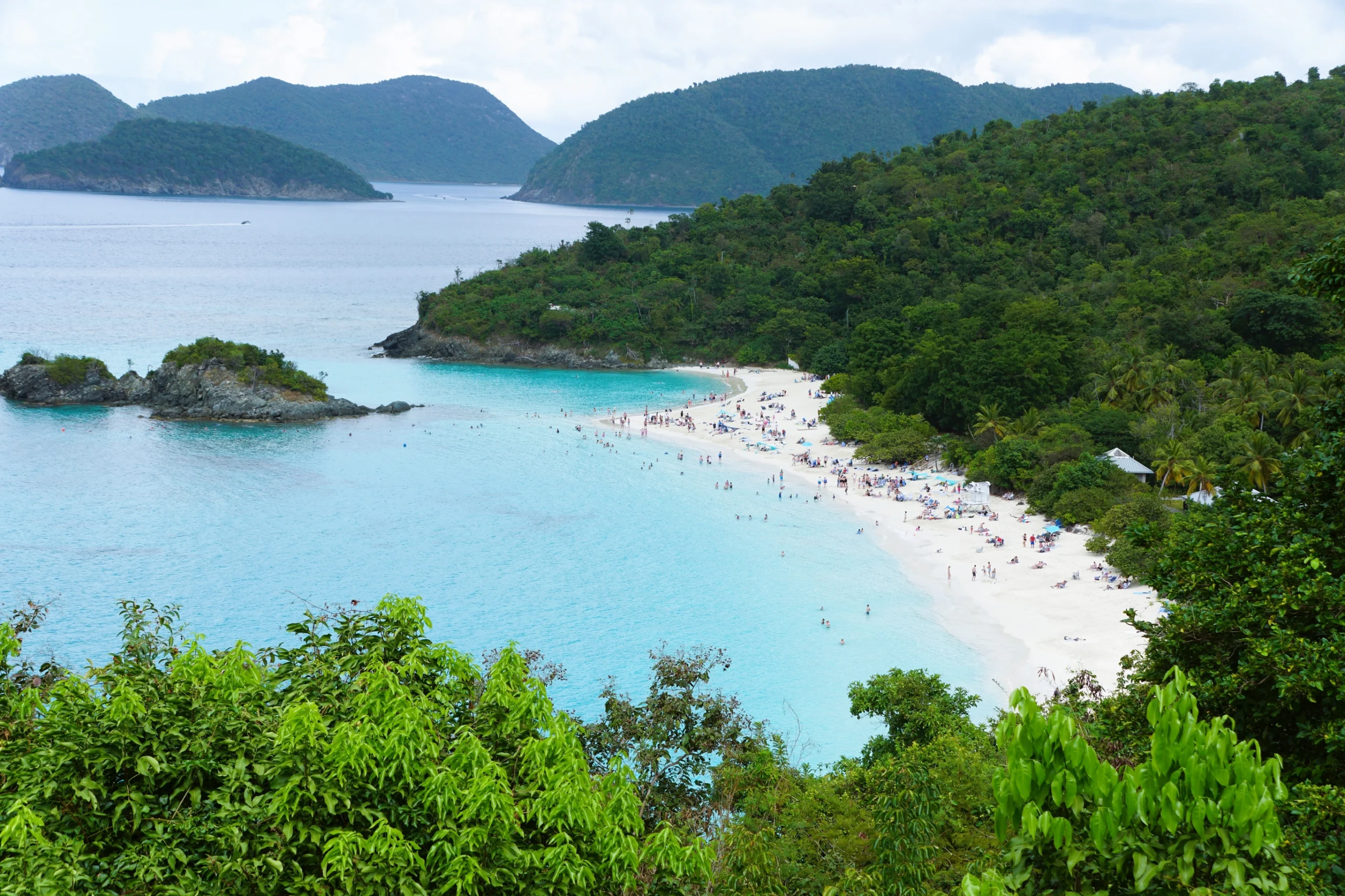
Photo by © Khairil Azhar Junos | Dreamstime.com
The Best Time to Sail the US Virgin Islands, Season by Season
The USVI runs on the classic Caribbean sailing calendar. Peak season is December through April when the trade winds are most consistent, rainfall is low, and daytime temps hover in the low-to-mid 80s. That’s also when marinas and mooring fields are fullest and prices are highest, so book ahead.
November and May are a great sweet spot: lighter crowds, better prices, and trade winds that are still solid. Late spring and summer bring warmer water and lush hillsides, but hurricane season officially runs June through November, and most charter operators scale back or pause operations during the peak of it. If you’re going in shoulder season, keep a close eye on the tropics.
Moorings, Anchoring Rules, and National Park Protocols
Moorings vs. anchoring: The National Park Service has expanded its mooring ball network across St. John and the surrounding cays, and using those moorings is now required in many spots where anchoring was once the norm.
Anchoring rules: Vessels can anchor in any bay or harbor for up to 14 cumulative days within a six-month period before needing to move on. Dinghies landing in national park areas need to use the posted landing zones.
Customs, Provisioning, and Emergency Contacts
Customs: If you’re arriving from a foreign port—including the British Virgin Islands just across the Sir Francis Drake Channel—standard customs clearance applies in both directions.
Emergencies: US Coast Guard Sector San Juan covers the USVI. VHF Channel 16 is your hailing and distress frequency, same as anywhere.
Provisions: Stock up thoroughly in Red Hook on St. Thomas or Christiansted on St. Croix. St. John’s options are limited (don’t count on resupplying there).
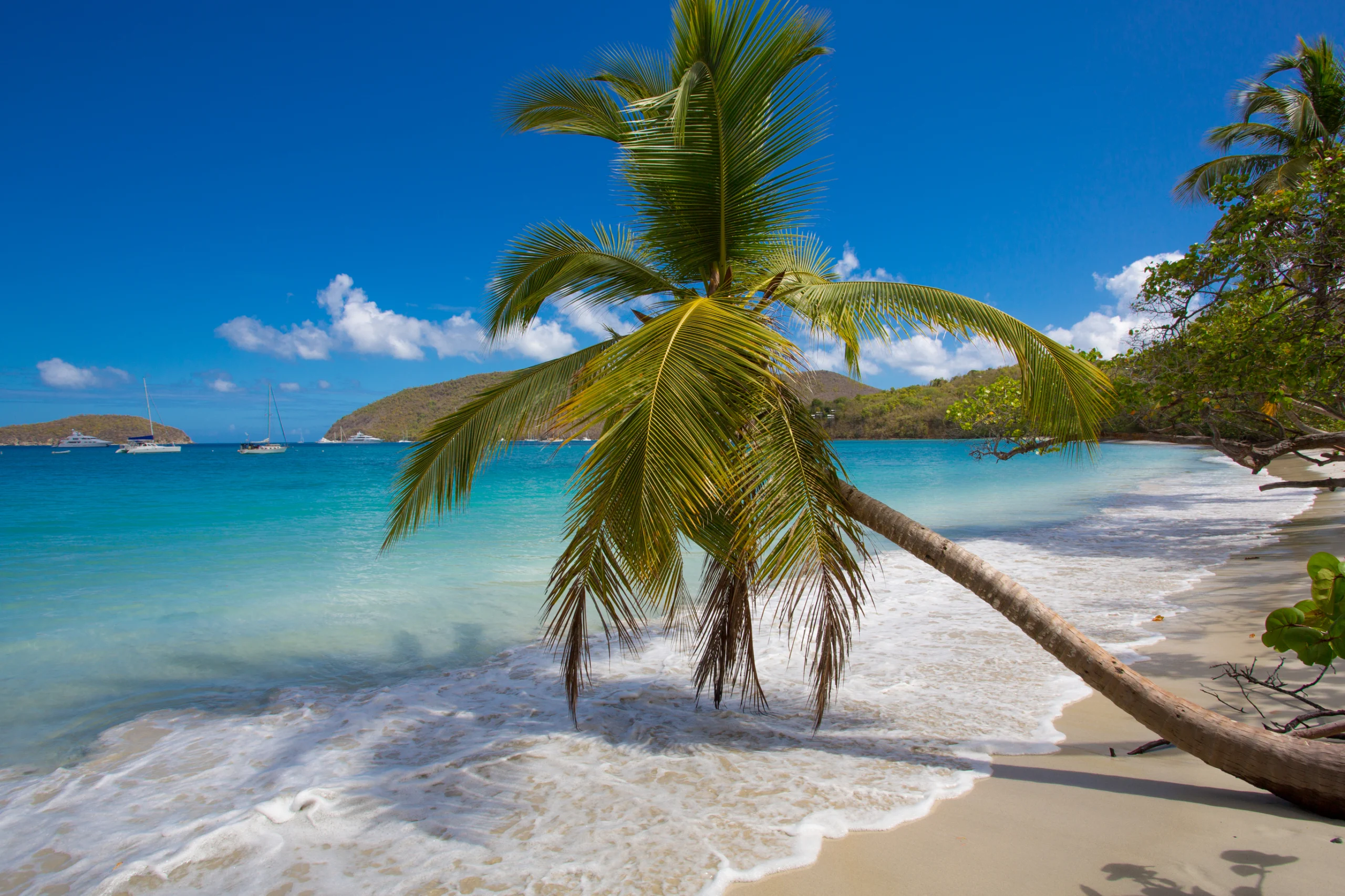
Photo by © James Schwabel | Dreamstime.com
Choosing the Right Charter for the USVI
The USVI has something for every kind of charterer. Bareboat charters—just you and your crew, no hired captain—are widely available out of Red Hook on St. Thomas, and the predictable trades and short passages actually make the USVI one of the better places in the Caribbean to build bareboat experience for the first time. If you want to formalize that, several operators run American Sailing Association certification courses built around USVI itineraries.
Crewed charters, with captain and cook aboard, run the full range: sailing catamarans, motor yachts, classic sloops, and the superyachts that rotate through Yacht Haven Grande each winter before migrating to the Mediterranean for summer. Whatever kind of boat time you’re looking for, you can find it here.
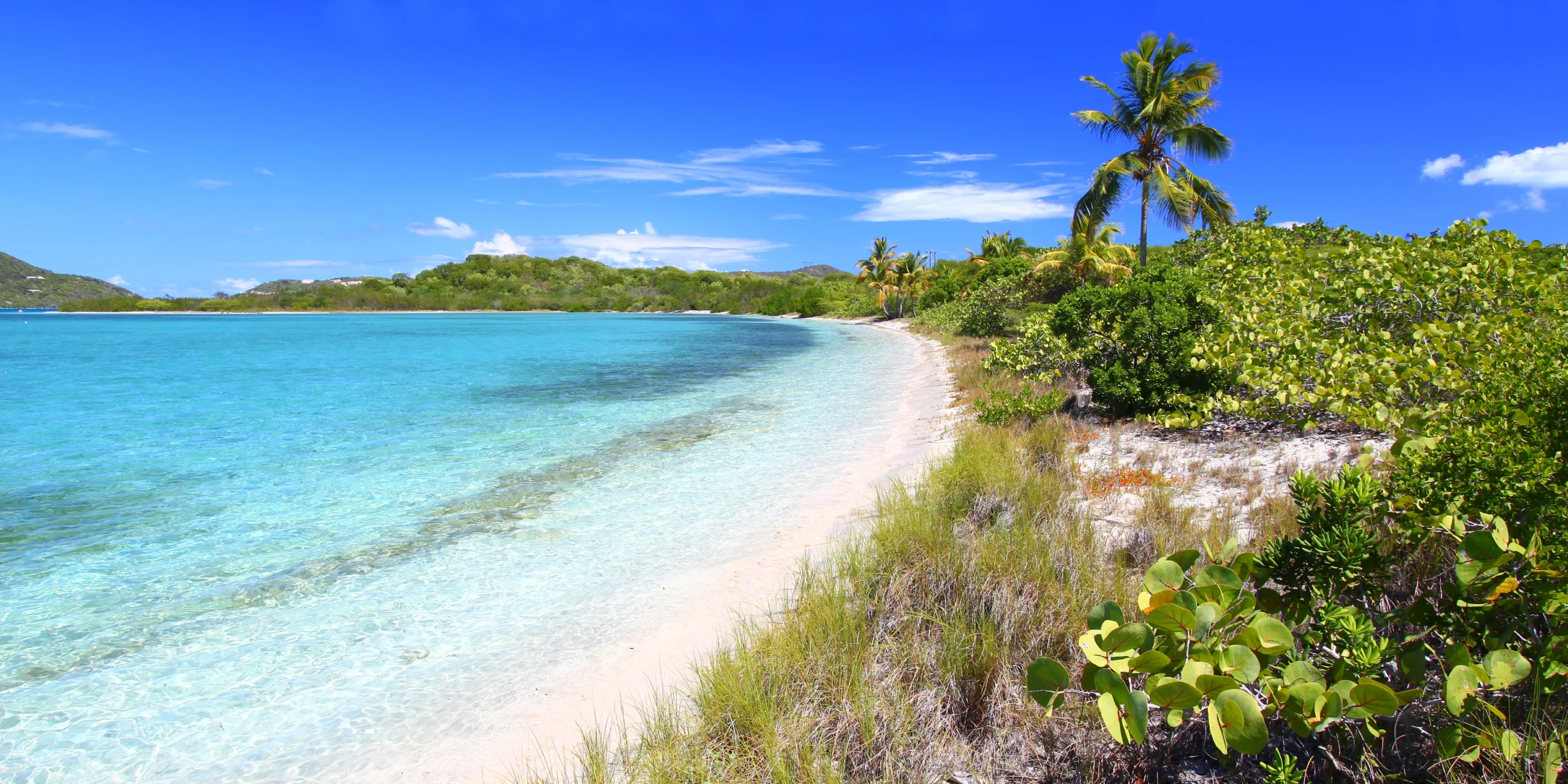
Photo by © Jason P Ross | Dreamstime.com
Why the British Virgin Islands Are Worth the Customs Paperwork
No guide to USVI sailing is complete without mentioning what’s right next door. The British Virgin Islands—Tortola, Virgin Gorda, Jost Van Dyke, Anegada—lie just a few miles to the east across the Sir Francis Drake Channel, and many charter itineraries combine both territories into a single circuit. There’s customs paperwork involved in crossing an international boundary, and you’ll want to sort out documentation and any charter restrictions in advance. But if you’re willing to do a little planning, the combined waters of the USVI and BVI are genuinely one of the great sailing experiences on earth.
More articles
Ready to set sail?
Discover the perfect yacht charter for you — effortlessly with Yacht.com.


